
If you’re searching for the 10 best places to visit in Croatia, the short answer is this: start with Dubrovnik and Split for history and beaches, add Hvar or Korčula for island life, build in Plitvice Lakes or Krka for waterfalls, and finish with Zagreb if you want a cheaper, less touristy few days. Croatia pulled in 21.3 million visitor arrivals in 2024, another record year for the country, so the coastline and the old towns get busy from June through August. That’s manageable once you know where the crowds concentrate and where they don’t.
This guide covers ten destinations: two capital-of-the-coast cities (Dubrovnik, Split), four islands and coastal towns (Hvar, Rovinj, Korčula, Šibenik, Trogir, which is actually five, but Croatia has that many worth naming), one national park (Plitvice Lakes), one budget-friendly coastal base (Zadar), and the inland capital (Zagreb). Along the way you’ll get real 2026 ticket prices, not vague “affordable” or “pricey” labels, plus how many days to budget for each stop and when to go.
Croatia joined the Schengen Area and switched to the euro on the same day, 1 January 2023, so there are no border stops between Croatia and most of its EU neighbors and no currency exchange to sort out if you’re coming from elsewhere in the eurozone. Citizens of the US, UK, Canada, and dozens of other countries can still enter visa-free for up to 90 days in any 180-day period, though the EU’s ETIAS pre-travel authorization system is expected to start applying to visa-exempt travelers sometime in late 2026.
Table of Contents
Ready to figure out which of these places fits your trip? Keep reading, or jump straight to the table below for a quick overview of the 10 best places to visit in Croatia.
10 Best Places to Visit in Croatia at a Glance
| Destination | Best For | Budget Level | Ideal Stay |
|---|---|---|---|
| Dubrovnik | City walls, Old Town, Game of Thrones sites | High | 2–3 days |
| Split | History, beaches, ferry connections | Medium | 2–3 days |
| Hvar | Island nightlife, lavender fields, sailing | High | 2 days |
| Zadar | Budget travel, sea organ, sunsets | Low–Medium | 2 days |
| Rovinj | Coastal photography, Istrian food | Medium | 2 days |
| Plitvice Lakes | Waterfalls, hiking, nature | Medium | 1–2 days |
| Zagreb | Museums, café culture, cheap eats | Low | 2 days |
| Korčula | Quiet island, Marco Polo lore, wine | Medium | 2 days |
| Šibenik | Cathedral, fortresses, Krka access | Low–Medium | 1–2 days |
| Trogir | Compact old town, day-trip base | Low | 1 day |
1. Dubrovnik: One of the Best Places to Visit in Croatia
Why Visit Dubrovnik?
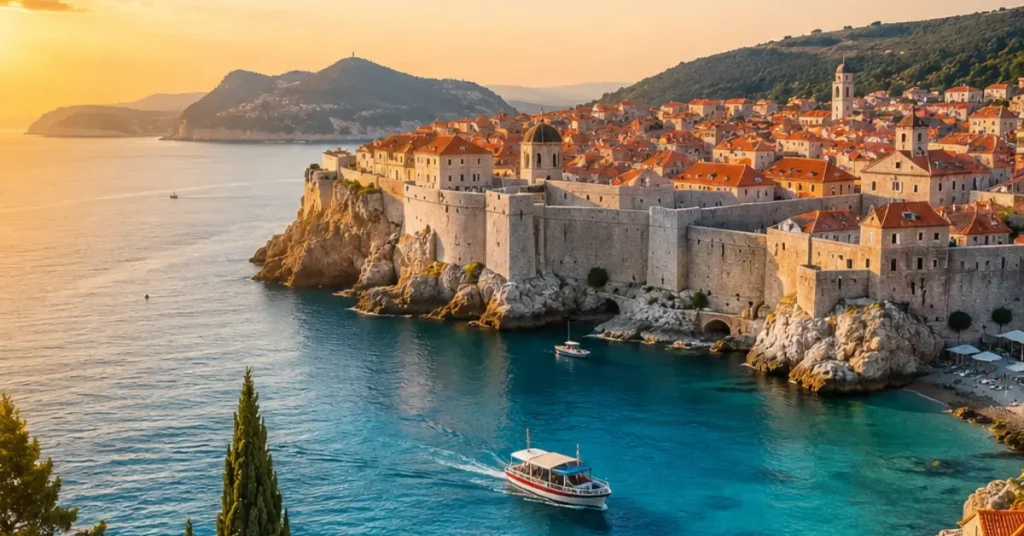
Dubrovnik’s Old Town sits inside a nearly complete ring of medieval walls, built up between the 12th and 17th centuries, with terracotta roofs packed tightly behind them and the Adriatic on three sides. It’s the city HBO used for King’s Landing in Game of Thrones, and fans still trace filming locations through the same streets locals have walked for centuries. Summer here means cruise-ship crowds and heat radiating off the limestone streets; spring and fall thin both out considerably.
Best Things to Do in Dubrovnik
Walk the 2-kilometer loop of the City Walls for views over the Old Town and the sea. Ride the cable car up Mount Srđ for a wider panorama, including a look at the old Napoleonic fort and a small war museum. Take the short boat over to Lokrum Island for a swim and a walk through its botanical garden. In the Old Town itself, the Stradun (the main limestone-paved street), Rector’s Palace, and Sponza Palace are worth a slow walk rather than a checklist visit.
How Much Does Dubrovnik Cost?
The City Walls ticket costs €40 per adult in 2026, and it includes Fort Lovrijenac at no extra charge. A one-day Dubrovnik City Pass costs the same €40 but throws in ten-plus museums and unlimited city buses, which makes it the better deal if you’re planning to see anything beyond the walls. Kids under seven get in free everywhere, and students with a valid ID card pay a reduced rate on most tickets. Meals and hotels in the Old Town run well above the Croatian average, so expect to pay a premium simply for being inside the walls rather than in the surrounding neighborhoods.
2. Split: Best for History, Beaches and Day Trips
Why Visit Split?
Split is built around and into Diocletian’s Palace, a Roman emperor’s retirement complex from around 300 AD that’s still a living neighborhood, and people run shops, restaurants, and apartments out of rooms that are, structurally, part of a UNESCO World Heritage site. It’s also Croatia’s main ferry hub, which makes it the obvious base for reaching Hvar, Brač, Vis, and Korčula.
Best Things to Do in Split
Walk through the Palace basement halls and up to the bell tower of St. Domnius Cathedral. Spend an afternoon at Bačvice Beach, a sandy cove a short walk from the center that fills up with locals playing picigin, a local ball game played in shallow water. Climb Marjan Hill for pine-forest trails and a view back over the city and harbor. Split is also the easiest jumping-off point for day trips to Krka National Park, about an hour’s drive away.
How to Visit Split on a Budget
Split’s food and accommodation prices sit noticeably below Dubrovnik’s for a comparable standard of hotel or meal. Riva promenade restaurants charge tourist prices; walk two or three streets back from the water and prices drop. Ferries here are also relatively cheap for day trips: a one-way catamaran ticket to Hvar can run as low as €6-8.50 outside peak departures, climbing to around €25 for the more convenient midday sailings in summer.
3. Hvar: One of the Best Croatian Islands to Visit
Why Visit Hvar?
Hvar has the reputation as Croatia’s party island, and Hvar Town’s harbor bars earn that reputation in July and August. But the island is bigger than its nightlife suggests. The interior is covered in lavender fields and vineyards, and the old town’s Venetian-era square, St. Stephen’s Cathedral, and hilltop fortress reward visitors who show up before the yachts do.
Best Things to Do in Hvar
Climb to the Spanish Fortress above Hvar Town for a sunset view over the harbor and the Pakleni Islands. Take a short boat to those islands for quieter swimming coves. If you’re visiting in June, the lavender fields around Velo Grablje and Brusje are at their most photogenic. Stari Grad, on the island’s other coast, is quieter and less expensive, and its plain, the Stari Grad Plain, is itself a UNESCO-listed agricultural landscape dating back to Greek colonization.
Is Hvar Expensive?
Yes, relative to the rest of Croatia. Hvar Town hotels and restaurants price closer to Dubrovnik than to Split, especially near the harbor in peak season. The passenger catamaran from Split runs from roughly €8.50 to €25–37.50 depending on operator, time, and how far ahead you book; car ferries to Stari Grad cost more but let you bring a vehicle onto the island.
4. Zadar: A Great Budget-Friendly Croatian Destination
Why Visit Zadar?
Zadar gets a fraction of Dubrovnik’s tourist numbers despite having a comparable old town, Roman ruins, and a genuinely unusual attraction: the Sea Organ, a set of stone steps built into the waterfront that turns wave motion into ambient musical tones. Alfred Hitchcock reportedly called Zadar’s sunset the best he’d ever seen, and the nearby Sun Salutation art installation lights up after dark using solar panels charged during the day.
Best Things to Do in Zadar
Sit at the Sea Organ around sunset. It’s free, and it’s the single most-recommended thing to do in the city. Walk the Roman Forum and St. Donatus Church, then the narrower streets of the old peninsula. Zadar is also a practical base for day trips to Plitvice Lakes (about 90 minutes by car) and the Kornati Islands archipelago by boat.
How to Save Money in Zadar
Zadar’s restaurant and accommodation prices run lower than Split’s and considerably lower than Dubrovnik’s or Hvar’s. It’s also well connected by low-cost flights, particularly from other parts of Europe, which can make it cheaper to fly into than Split or Dubrovnik in shoulder season.
5. Rovinj: A Stunning Coastal Town in Croatia
Why Visit Rovinj?
Rovinj sits on the Istrian peninsula, in Croatia’s northwest, and its old town occupies a small former island now connected to the mainland, with narrow lanes climbing toward the Church of St. Euphemia and pastel buildings crowding right up to the water. Istria as a region has a different feel from Dalmatia: closer culinary and historical ties to Italy, truffle hunting inland, and a slower pace overall.
Best Things to Do in Rovinj
Climb to St. Euphemia’s bell tower for the widest view over the rooftops and harbor. Walk or cycle out to the Golden Cape (Zlatni Rt) forest park for pebble coves shaded by pine trees. Rovinj is also a good base for day trips into inland Istria: hill towns like Motovun and Grožnjan, both known for truffles and wine.
Best Time to Visit Rovinj
Late spring (May–June) and early fall (September) hit the sweet spot: warm enough to swim, without the July–August crowding at the harbor restaurants. Istrian truffle season peaks in autumn, which is also worth timing a visit around if food is part of your trip.
6. Plitvice Lakes National Park: Best for Nature Lovers
Why Visit Plitvice Lakes?
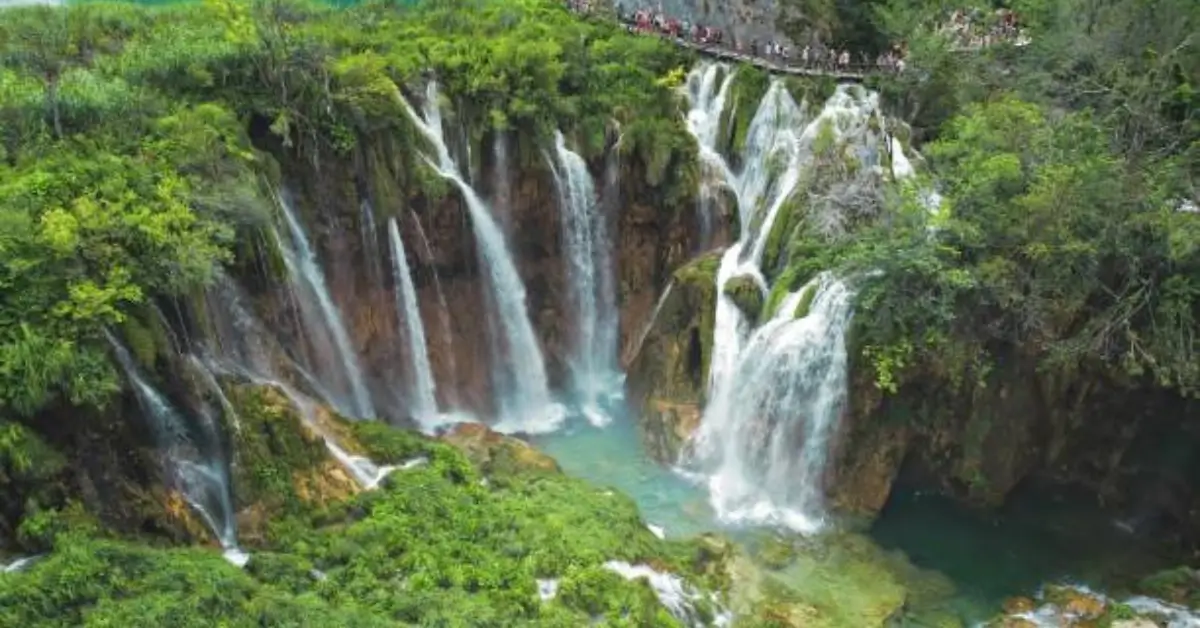
Plitvice Lakes National Park is Croatia’s oldest and largest national park, a UNESCO World Heritage site built around sixteen terraced lakes connected by waterfalls, with wooden boardwalks running directly over and alongside the water. It sits inland, roughly two hours from Zagreb and about the same from Zadar, which makes it a natural stop between the capital and the coast rather than a coastal destination itself.
What to See and Do
The park is split into Upper and Lower Lakes, connected by a shuttle bus, plus an electric boat crossing over Lake Kozjak. Veliki Slap, Croatia’s tallest waterfall at around 78 meters, is the single most-photographed spot in the park. Trails range from a two-hour loop to a full-day circuit covering both sections; swimming has been banned throughout the park since 2021 to protect the lakes’ tufa formations.
How to Visit Plitvice Lakes on a Budget
2026 ticket prices are seasonal: about €40 per adult from June through September, €23 in April, May, and October, and around €10 from November through March. A late-entry discount applies in peak season: tickets bought for entry after 4 p.m. cost about €25 in summer. Parking costs roughly €1 per hour at the official lots. Because the park caps hourly visitor numbers, especially in summer, booking your timed entry online in advance is close to mandatory in July and August; walk-up tickets at the gate routinely sell out.
7. Zagreb: Best for Culture and Value
Why Visit Zagreb?
Zagreb doesn’t get the postcard treatment Dubrovnik and Split do, and that’s part of the appeal. It’s a working capital with a genuine café culture, cheaper prices, and museums that skew toward the odd and specific, including the Museum of Broken Relationships, built entirely from donated objects and the breakup stories attached to them.
Best Things to Do in Zagreb
Walk the Upper Town (Gornji Grad) for St. Mark’s Church and its tiled roof, then take the funicular, one of the shortest in the world, down to the Lower Town. Dolac Market runs every morning and is a better source of cheap, fresh food than most restaurants nearby. Zagreb’s Advent Christmas market, held through December, has repeatedly been ranked among Europe’s best.
Is Zagreb Good for Budget Travelers?
Yes. It’s consistently the cheapest of Croatia’s major cities for food, drink, and accommodation, since it doesn’t carry the coastal tourist premium. It also works well as a one- or two-day add-on before or after a coastal trip, since Zagreb Airport is a common entry point and the city connects by bus or train to most of the coast.
8. Korčula: A Beautiful Croatian Island to Explore
Why Visit Korčula?
Korčula’s old town is laid out on a small peninsula in a fishbone pattern, its side streets angled to funnel sea breeze through while blocking the worst of the wind, a genuinely clever piece of medieval town planning. The island claims (with some historical dispute) to be the birthplace of Marco Polo, and it’s known separately for the Moreška, a centuries-old sword dance performed in the old town in summer.
Best Things to Do in Korčula
Walk the old town walls and climb St. Mark’s Cathedral tower for a view over the peninsula. Visit the small Marco Polo House, more atmosphere than artifact but worth ten minutes. The island’s interior produces some of Croatia’s better-known white wines, Pošip and Grk, and several family-run wineries near the villages of Smokvica and Čara offer tastings.
How to Get to Korčula
Korčula is reachable by catamaran from Split and Dubrovnik, both roughly three to three-and-a-half hours, with more frequent seasonal sailings from April through October. It’s also a common stop on multi-island ferry routes that link Split, Hvar, Korčula, and Dubrovnik in a single run, which makes it easy to work into a broader island-hopping itinerary rather than visiting on its own.
9. Šibenik: One of Croatia’s Best Historic Coastal Cities
Why Visit Šibenik?
Šibenik is the oldest native Croatian town on the Adriatic. Unlike most Dalmatian coastal cities, it wasn’t founded by Greeks or Romans. Its Cathedral of St. James is built entirely of interlocking stone slabs without mortar or wooden supports, a construction method unique enough to earn it UNESCO World Heritage status. The city also functions as the main gateway to Krka National Park.
Best Things to Do in Šibenik
Tour the Cathedral of St. James and its unusual carved frieze of 71 faces along the exterior. Climb up to St. Michael’s Fortress for harbor views, and if timing allows, catch a performance at its open-air summer stage. Šibenik was also a filming location for several Game of Thrones scenes, and it’s the departure point for boats into the Krka canyon.
Šibenik on a Budget
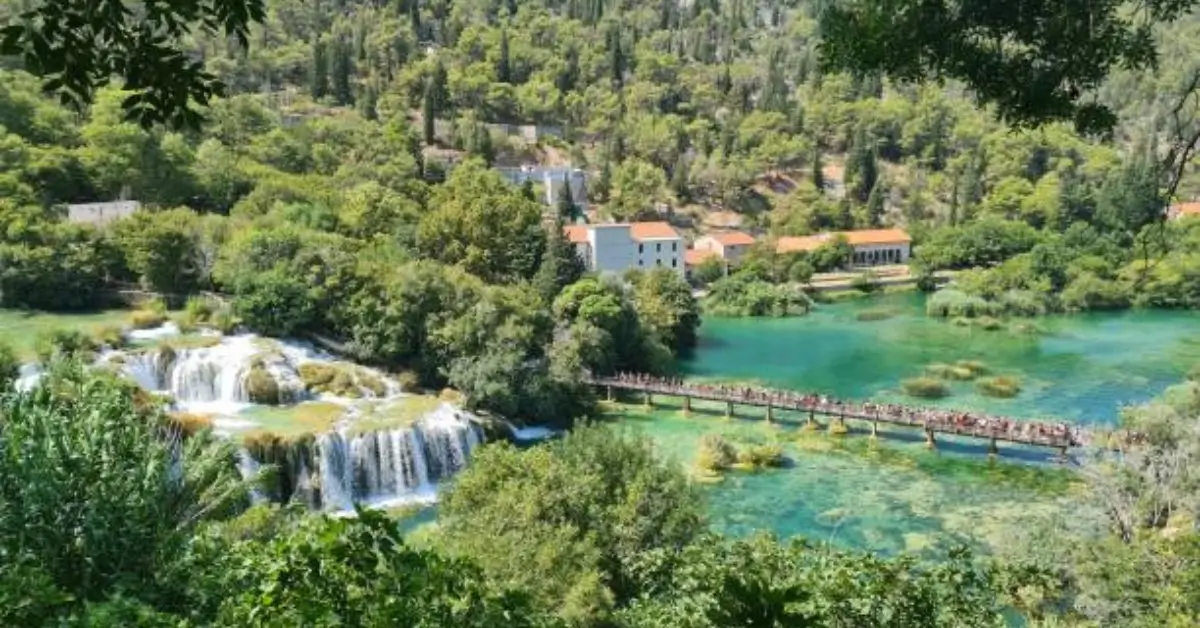
Šibenik runs cheaper than Split or Dubrovnik for food and lodging, while still putting Krka National Park within a short bus or taxi ride. Krka’s 2026 adult ticket costs €40 in peak summer before 3 p.m. (dropping to €30 after 3 p.m.), €20 in the April–May and October shoulder months, and €7 from November through March, the same seasonal pattern as Plitvice, just with a discounted afternoon rate that Plitvice’s own late-entry ticket roughly mirrors.
10. Trogir: A Beautiful Historic Place to Visit in Croatia
Why Visit Trogir?
Trogir’s entire old town sits on a small island connected to the mainland and to the larger island of Čiova by two bridges, and the whole thing is compact enough to see on foot in a few hours. It’s a UNESCO World Heritage site built up over more than two thousand years, with Romanesque, Gothic, and Renaissance buildings packed into a genuinely walkable core.
Best Things to Do in Trogir
Visit the Cathedral of St. Lawrence, whose main portal is considered one of the best-preserved Romanesque-Gothic works in the region. Climb Kamerlengo Fortress on the western edge of the old town for a sunset view over the harbor. Trogir makes an easy half-day trip from Split, about 30 minutes away by bus, or a quieter overnight base if you’d rather skip Split’s crowds while still being close to its airport.
How Long Do You Need in Trogir?
Most visitors see the old town’s highlights in three to four hours. A full day lets you add a swim at Čiovo’s beaches or a short boat trip to nearby islands, but Trogir works well as a day trip layered onto a Split-based itinerary rather than a standalone base.
Best Places to Visit in Croatia for Different Travelers
Best Places to Visit in Croatia for Couples
Rovinj and Hvar both suit couples well, for different reasons: Rovinj for quiet evening walks and seafood dinners on the water, Hvar for a livelier mix of beach clubs and boat trips to the Pakleni Islands. Korčula is a good middle ground if you want island scenery without Hvar’s crowds.
Best Places in Croatia for Beaches
Hvar and the islands around Split (Brač’s Zlatni Rat, in particular) have Croatia’s best-known beaches, though almost all Croatian beaches are pebble or rock rather than sand. Zadar’s Kolovare and a handful of coves near Split’s Bačvice are among the few sandy exceptions.
Best Places in Croatia for Nature
Plitvice Lakes and Krka cover the two big waterfall parks; Plitvice is larger and busier, Krka allows more relaxed walking and (outside the main falls) is generally the cheaper and less crowded of the two.
Best Places in Croatia for Budget Travelers
Zagreb, Zadar, and Šibenik consistently run cheaper than Dubrovnik, Split, or Hvar for food, transport, and lodging, without giving up much in terms of things to see.
How to Choose the Best Place to Visit in Croatia
- Best for first-time visitors: Split, since it balances history, beaches, and ferry access to the islands in one base.
- Best for couples: Rovinj or Hvar, depending on whether you want quiet or nightlife.
- Best for beaches: Hvar and Brač, both reachable from Split.
- Best for history: Dubrovnik and Trogir, for concentrated, walkable old towns.
- Best for nature: Plitvice Lakes, with Krka as the cheaper alternative.
- Best for budget travel: Zagreb, Zadar, and Šibenik.
How Many Days Do You Need in Croatia?
Croatia in 5 Days
Base yourself in Split, with a day trip to Krka or Plitvice, a day or overnight on Hvar, and a half-day in Trogir. This covers history, nature, and island time without much backtracking.
Croatia in 7 Days
Add Dubrovnik to the five-day version above, connecting from Split by a roughly four-and-a-half-hour bus or a short domestic flight. Seven days is enough to see the coast’s major highlights without rushing any one stop to under a day.
Croatia in 10 Days
Ten days lets you add Zagreb and Plitvice Lakes as an inland loop before heading to the coast, plus a second island (Korčula or Vis) alongside Hvar. This is close to the minimum for seeing both the inland and coastal sides of the country properly rather than picking one.
Best Time to Visit the Best Places in Croatia
Croatia in Spring
April and May bring mild weather, blooming lavender on Hvar by late May and into June, and noticeably lower prices at both national parks and coastal hotels than in summer.
Croatia in Summer
June through August is peak season: warmest sea temperatures, longest days, and the highest prices and crowd levels, especially in Dubrovnik and Hvar. Plitvice and Krka both charge their highest ticket prices in this window and require advance booking.
Croatia in Fall
September and into early October keep summer-warm sea temperatures with thinner crowds and lower prices, making it many repeat visitors’ preferred season. Istrian truffle season also falls in autumn.
Croatia in Winter
November through March is the off-season along the coast, with many restaurants and smaller hotels closed. It’s also when Plitvice and Krka charge their lowest ticket prices (around €7–10), and when Zagreb’s Advent market runs through December, making the capital the better winter destination of the two options.
How to Visit Croatia on a Budget
- Cheap flights: Zadar and Zagreb tend to have more low-cost carrier routes than Split or Dubrovnik, which can shift where it makes sense to fly into.
- Budget hotels: Prices in Zagreb, Zadar, and Šibenik run well below Dubrovnik, Split, or Hvar for a comparable standard of room.
- Public transportation: Intercity buses connect nearly every town on this list and are considerably cheaper than renting a car, though less flexible for reaching smaller villages.
- Ferries: Book catamaran tickets online in advance for summer travel; early or late sailings are usually cheaper than midday departures, and prices can range from around €6 to €37 depending on route, timing, and operator.
- Affordable food: Markets like Zagreb’s Dolac or Split’s Pazar sell fresh produce and bakery items at local prices, well below restaurant menus in tourist areas.
- Shoulder-season travel: Visiting in May, June, September, or October cuts both accommodation costs and national park entrance fees roughly in half compared with peak summer.
- Booking activities wisely: Timed-entry tickets for Plitvice and Krka are the same price whether bought directly or through most resellers, so buying straight from the official park websites avoids added booking fees.
Once you’ve settled on a rough route, it’s worth pricing out a sample itinerary against your own budget before locking in flights. A five-day Split-based trip and a ten-day loop through Zagreb, Plitvice, and the coast can end up costing very differently once ferries, park tickets, and hotel nights are added up.
Croatia Travel Mistakes to Avoid
- Underestimating peak-season costs. Hotel rates, ferry tickets, and national park entry fees can double or more between winter and August; the €40 peak-summer ticket at both Plitvice and Krka drops to roughly a quarter of that price in winter.
- Overbooking your itinerary. Trying to fit Dubrovnik, Split, Hvar, Plitvice, and Zagreb into five days means spending more time in transit than at any one place. Pick three or four bases and go deeper rather than wider.
- Ignoring transportation costs. Ferries, buses, and parking fees add up quickly across an island-hopping itinerary; a private speedboat transfer between Split and Hvar, for comparison, can run several hundred euros against a €25 catamaran ticket.
- Staying only in expensive tourist areas. A room or meal two or three streets back from Dubrovnik’s Stradun or Split’s Riva is often notably cheaper than one directly on the waterfront, for a similar standard.
- Skipping price comparisons on ferries and tours. Multiple operators (Jadrolinija, Krilo, TP Line) often run the same island routes at different prices and speeds; checking more than one before booking can save a meaningful amount over a multi-stop trip.
FAQ: Best Places to Visit in Croatia
What are the 10 best places to visit in Croatia?
Dubrovnik, Split, Hvar, Zadar, Rovinj, Plitvice Lakes National Park, Zagreb, Korčula, Šibenik, and Trogir, covering historic cities, islands, a waterfall park, and the inland capital.
What is the best place to visit in Croatia for first-time visitors?
Split, since it combines a walkable historic core, beach access, and ferry connections to the islands from a single base.
What is the best place to visit in Croatia for couples?
Rovinj for a quieter, more romantic pace, or Hvar for a livelier island trip with beach clubs and boat excursions.
What is the most beautiful place in Croatia?
This comes down to taste, but Plitvice Lakes and Dubrovnik’s Old Town are the two most photographed and most frequently cited as Croatia’s standout sights.
What is the best Croatian island to visit?
Hvar for nightlife and lavender fields, Korčula for a quieter alternative with wine and history, Brač if a specific beach (Zlatni Rat) is the priority.
What is the cheapest place to visit in Croatia?
Zagreb, followed closely by Zadar and Šibenik. All three run noticeably cheaper than Dubrovnik, Split, or Hvar for food, lodging, and activities.
How many days are enough for Croatia?
Seven days covers the coastal highlights comfortably; ten days lets you add Zagreb and a second island without rushing.
What is the best month to visit Croatia?
June and September are the most commonly recommended: warm enough to swim, with lower prices and smaller crowds than July or August.
Final Thoughts on the 10 Best Places to Visit in Croatia
Out of all the 10 best places to visit in Croatia covered here, the right pick depends on your priorities. If you only have a few days, Split is the easiest base for a first trip; if you want beaches and nightlife, add Hvar; if nature and waterfalls matter more, prioritize Plitvice or Krka over a second city; and if budget is the deciding factor, Zagreb, Zadar, and Šibenik will stretch it the furthest.
Whichever combination you choose, the biggest cost swings in Croatia come from timing rather than destination. The same national park ticket or ferry crossing can cost two to four times as much in August as it does in May or October, so building your trip around the shoulder seasons is usually the single most effective way to keep the budget in check.
Start mapping out your route, price a few ferry and park tickets for your actual travel dates, and book the popular ones (Plitvice, Krka, the Split–Hvar catamaran) ahead of time if you’re traveling in summer.