

How to find cheap flights comes down to one core approach: stay flexible with your travel dates, compare prices across multiple search engines like Google Flights, Skyscanner, and Kayak, set up price alerts, book domestic flights one to three months ahead and international flights two to six months ahead, and always factor in extra fees like baggage and seat selection before comparing final prices.
Quick Reference: 10 Ways to Find Cheap Flights
Looking for a cheaper flight does not depend on one secret trick. These 10 strategies can help you compare more options, spot better fares, and avoid costs that can make a cheap ticket more expensive.
| Strategy | What to Do |
|---|---|
| Flexible dates | Compare nearby departure and return dates. |
| Booking timing | Compare fares within a reasonable booking window. |
| Search engines | Compare more than one flight search platform. |
| Price alerts | Track fares instead of checking manually every day. |
| Alternative airports | Compare nearby departure and arrival airports. |
| Budget airlines | Compare the final price after baggage and other extras. |
| Incognito mode | Do not rely on private browsing as a guaranteed way to lower fares. |
| Miles and points | Use rewards when they provide genuine value. |
| One-way tickets | Compare separate one-way fares with round-trip options. |
| Extra fees | Check the final checkout price before booking. |
How to find cheap flights with minimal effort
How to find cheap flights without spending hours searching comes down to letting technology do the work for you. Set up price alerts on Google Flights or Skyscanner and let them notify you the moment fares drop. Use each site’s flexible date or “search everywhere” feature instead of manually checking dates one by one. This way, you get the same savings as active searching, but with just a few minutes of setup.
Table of Contents
Why Do Flight Prices Change?
Flight prices move up and down constantly, and it’s not random. A few factors drive most of the shifts. Supply and demand is the biggest one, when more people search for a route, prices climb. The travel season matters too, holidays and peak summer dates almost always cost more than regular weekdays. The day you book plays a role, some days consistently offer better deals than others.
The time of day your flight departs matters as well, early morning or late night flights tend to be cheaper. Airlines also run their own pricing strategies, some reward early bookers while others raise prices closer to departure. And behind all of it, dynamic pricing algorithms are constantly adjusting fares in real time based on demand, timing, and competitor pricing.
Understanding these factors helps you book with more confidence instead of guessing or panicking when prices shift.
10 Proven Strategies to Find Cheap Flights
Here’s the detailed breakdown of what actually works, strategy by strategy.
1. Be Flexible with Your Travel Dates
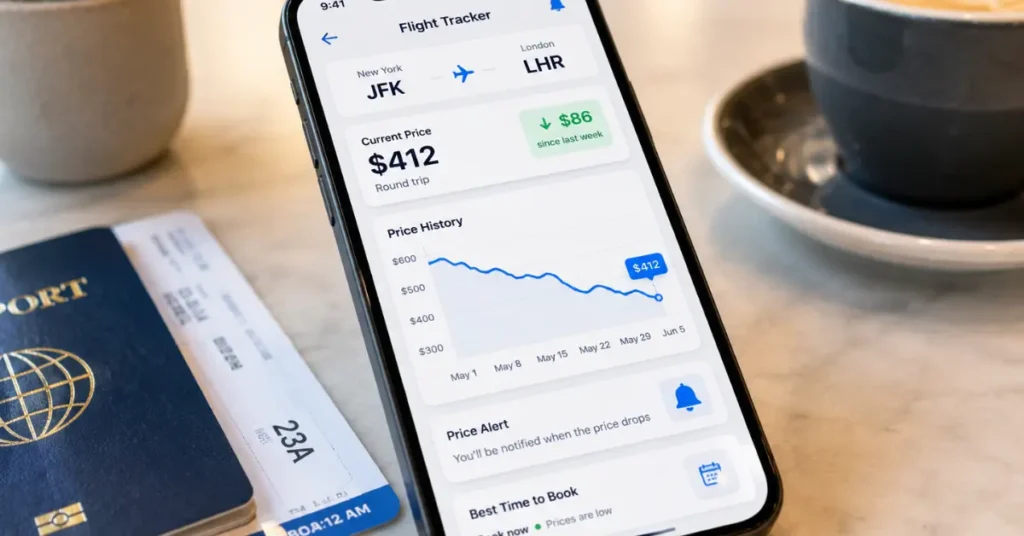
Flying midweek, Tuesday or Wednesday instead of Friday or Saturday, usually means a noticeably lower price. Weekend departures see higher demand, which pushes fares up. Avoiding official holidays and major events also helps, since those windows almost always come with peak pricing. Shifting your trip by even a day or two can lead to real savings.
2. Book at the Right Time
For domestic flights, the sweet spot is usually one to three months before departure. For international flights, book earlier, somewhere between two and six months out, especially for popular routes. Booking too early or waiting until the last minute both carry risk, the goal is finding the right window for your specific trip.
3. Compare Multiple Flight Search Engines
Never book from the first site you open. Comparing platforms is one of the simplest ways to guarantee a better deal.
Google Flights gives a fast, clean overview and makes comparing dates easy. Skyscanner is great when you’re flexible on destination, with a “search everywhere” option. Kayak stands out for its price tracking and alert tools. Momondo pulls results from a wide range of sources and sometimes surfaces deals other sites miss.
Spending five minutes comparing these can save you real money on a single booking.
4. Set Price Alerts
Instead of manually checking fares every day, let alerts do the work. Pick your route and dates on a platform like Kayak or Google Flights, and get notified when the price drops or rises. This saves time and helps you catch the right moment to book.
5. Fly from Alternative Airports
If your city has more than one airport, or a nearby city does, compare both. A small difference in distance can mean a big difference in fare. The same applies on arrival, landing at a smaller nearby airport is sometimes cheaper than flying directly into the main one.
6. Consider Budget Airlines
Low-cost carriers offer attractive base fares, but read the fine print. Baggage, seat selection, and other extras are usually charged separately. For light packers, this can mean real savings. But add checked luggage, a chosen seat, and a meal, and the final price can end up close to a full-service airline.
7. Does Incognito Mode Actually Lower Prices?
This is a popular myth without strong evidence behind it. The idea that sites track you and raise prices on repeat searches isn’t well supported. Price changes are driven far more by demand, timing, and dynamic pricing algorithms than by your browser history. Some travelers still use incognito mode as a precaution, and it doesn’t hurt, but it’s not a reliable strategy on its own.
8. Redeem Airline Miles and Credit Card Points
Frequent travelers can save significantly through loyalty programs. Many credit cards earn points on everyday spending that can be converted into flights or upgrades. The key is planning ahead so points don’t go unused.
9. Mix One-Way Tickets
Sometimes two separate one-way tickets from different airlines cost less than a round-trip fare from a single carrier. It takes a bit more time to compare, but the price difference can be significant on certain routes.
10. Avoid Extra Fees
Baggage, seat selection, and priority boarding are common add-ons, especially on budget carriers. Calculate the full cost including these extras before comparing two tickets, otherwise the comparison isn’t accurate.
Best Days and Months to Book Flights
| Situation | Best Time to Book |
| Domestic flights | One to three months before departure |
| International flights | Two to six months before departure |
| Summer travel | Book as early as possible |
| Off-season travel | Usually the best prices |
These are general guidelines, not a fixed rule, but they’re a solid starting point for planning ahead.
Best Tools to Find Cheap Flights
| Tool | Best For | Key Feature |
| Google Flights | Quick comparisons | Fast results and date comparison |
| Skyscanner | Flexible destinations | “Search everywhere” for a full month |
| Momondo | Discovering varied deals | Results from diverse sources |
| Kayak | Tracking prices | Reliable price alerts |
Using two or three of these together, rather than relying on just one, gives the most accurate picture of the market.
Cheap Flight Deal Checklist: Check Before You Book
Finding a low advertised fare is only half the job. Before you book, check the full cost and the conditions attached to the ticket. A quick review can help you avoid turning a cheap-looking fare into an expensive booking.
- ☐ Base ticket price
- ☐ Checked baggage cost
- ☐ Carry-on allowance
- ☐ Seat selection fees
- ☐ Airport location
- ☐ Change and cancellation rules
- ☐ Total price at checkout
- ☐ Transportation costs to and from the airport
Quick rule: Compare the total trip cost, not just the fare shown in the first search result.
Common Mistakes to Avoid
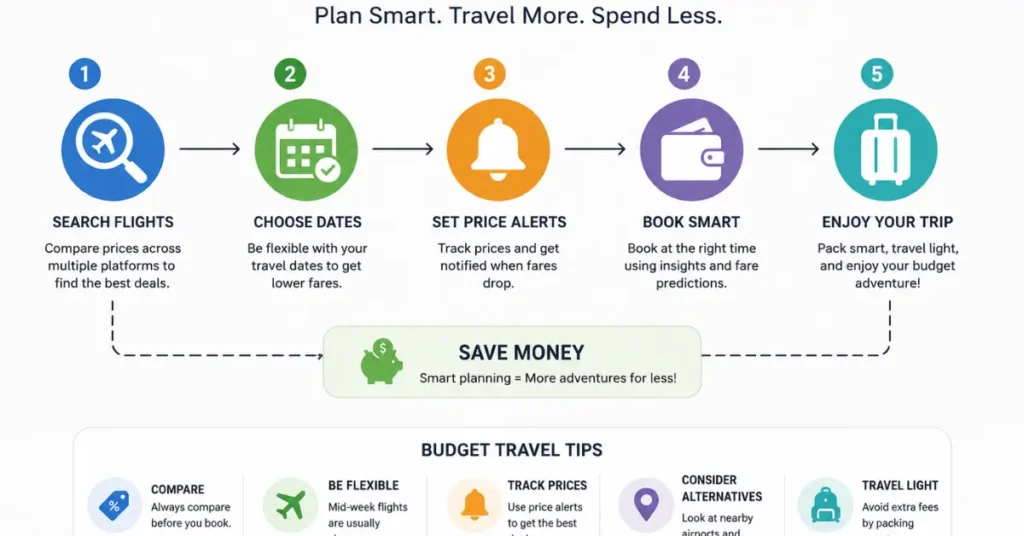
Booking at the last minute usually backfires, since prices tend to rise closer to departure. Ignoring alternative airports means missing out on potential savings nearby. Skipping price comparisons across multiple sites leaves money on the table. Overlooking extra fees turns a good deal into an unpleasant surprise at checkout. And traveling during peak season without planning ahead often means paying several times the normal fare.
Frequently Asked Questions
How can I find cheap flights every time I travel?
Combine flexibility with dates, price comparisons across multiple sites, price alerts, and booking at the right time. No single trick works alone, consistency across all of them gets the best results.
What is the cheapest day to book flights?
There’s no universal day that works for every route, but midweek bookings tend to be cheaper than weekend ones in general.
Are flight prices lower at night?
Not reliably. Prices are driven by demand and pricing algorithms far more than by the time of day you search.
Is Google Flights the best tool?
It’s excellent for quick, clean comparisons, but pairing it with Skyscanner or Kayak helps confirm you’re getting the best deal available.
Do airlines drop prices at the last minute?
Rarely, and it’s a risky bet. Prices usually rise as departure gets closer, especially during busy travel periods.
How far in advance should I book?
Domestic flights: one to three months ahead. International flights: two to six months ahead, depending on route popularity.
Are budget airlines worth it?
Yes, for light packers who don’t need extras. Just calculate all add-on fees before comparing the final price to a full-service airline.
How to Know When You’ve Found a Good Flight Deal
A low fare is not automatically a good deal. Before booking, compare the final price, travel time, baggage allowance, airport location, and ticket conditions. A slightly more expensive flight can sometimes be the better value when it saves you from expensive extras or an inconvenient journey.
| Check | Good Sign | Warning Sign |
|---|---|---|
| Fare | Competitive final price | Low advertised fare with expensive extras |
| Baggage | Your luggage is included | Important bags cost extra |
| Airport | Convenient location | Expensive or difficult transfer |
| Schedule | Fits your itinerary | Very long or inconvenient journey |
| Ticket rules | Reasonable conditions | Highly restrictive ticket |
The best flight deal is usually the one that offers the right balance of price, convenience, and total travel cost.
Final Tips
Compare prices across multiple sites every time. Stay flexible with your dates whenever possible. Set up price alerts instead of checking manually. Book within the right window for your trip type. Watch for seasonal deals and promotions. And if you travel often, make loyalty points and miles part of your routine.
Further Reading
For live prices and up-to-date deals, check Google Flights, Skyscanner, Kayak, and Momondo directly, since fares change daily and this guide focuses on strategy rather than real-time pricing.