
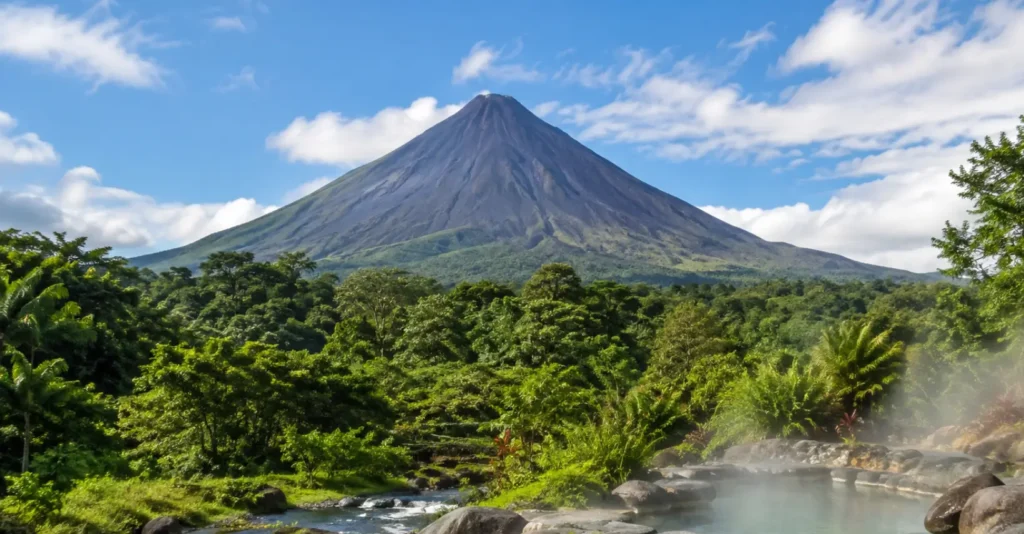
Planning a Costa Rica trip itinerary? The classic 7 to 10 day route through La Fortuna, Monteverde, and Manuel Antonio is the easiest starting point for most travelers, and it can be done on public buses for well under what a rental car and resort stays would cost. Five different routes below cover that trip and four others, sized for anywhere from 5 to 14 days, so you can pick based on the time and budget you actually have instead of trying to force every ecosystem into one loop.
Each route is built around real driving distances, current park entry rules, and the mistakes that catch first-time visitors most often.
Table of Contents
The Classic Triangle (7 to 10 Days)
This route covers San José, La Fortuna, Monteverde, and Manuel Antonio in 7 to 10 days, and it’s the most traveled circuit in the country because the roads connecting all four stops are in good enough shape for a rental car or shared shuttle without much hassle.
Route: San José → La Fortuna (Arenal Volcano) → Monteverde → Manuel Antonio
- San José to La Fortuna: about 3 hours by car, longer by public bus with a transfer
- La Fortuna to Monteverde: roughly 3 hours by road, though a combined jeep-boat-jeep shuttle across Lake Arenal cuts this down and is worth the extra few dollars
- Monteverde to Manuel Antonio: about 4 to 5 hours, the longest single leg of the trip
Arenal is worth two nights if your budget allows it. The volcano itself no longer erupts on the schedule it once did, but the hot springs and lava field hikes around it are reason enough to stay. Monteverde’s cloud forest reserves are best visited early morning, before the tour groups arrive and before the afternoon mist rolls in.
Budget note: this route works well by public bus if you’re not in a rush, and a rental car mainly buys you flexibility rather than speed.
The Dual-Coast Loop (10 to 14 Days)
For travelers with more time, splitting the trip between the Caribbean and Pacific sides shows a genuinely different country. The pace, the food, and even the architecture change once you cross from one coast to the other, and skipping one side means missing half of what makes Costa Rica interesting.
Route: San José → Tortuguero → Puerto Viejo (Caribbean coast) → Manuel Antonio or the Osa Peninsula (Pacific coast)
Tortuguero has no road access at all, which keeps it quiet and genuinely off the typical tourist track. Getting there means a boat from the closest road-accessible town, an extra logistical step that also happens to filter out most day-trippers. Puerto Viejo, further south along the Caribbean coast, has a reggae-influenced, laid-back pace that contrasts sharply with the more polished infrastructure on the Pacific side.
Budget note: this loop takes more travel days than the classic triangle, but each individual leg tends to cost less, since Caribbean-side accommodation runs cheaper than Pacific hotspots like Manuel Antonio or Tamarindo.
The Pacific Surf and Beach Route (7 Days)
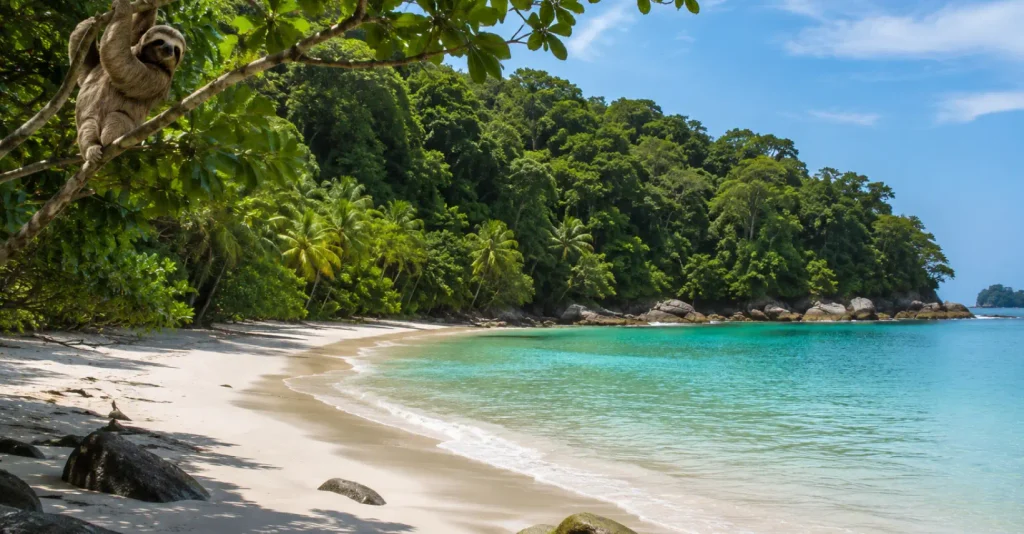
If beaches and surf are the priority over rainforest hiking, staying entirely on the Pacific side keeps driving time low and beach time high.
Route: Manuel Antonio → Santa Teresa or Malpaís → Tamarindo
Manuel Antonio National Park charges $18 for foreign adults as of 2026, caps visitors at 600 per day, and now requires booking online in advance rather than at the gate. Travelers who show up without a reservation are turned away, so book your entry the moment your dates are set, not the week before.
Santa Teresa and Malpaís share a laid-back surf-town identity with fewer resorts and a younger crowd than Tamarindo, which has grown considerably more built-up and geared toward package tourism in recent years.
The Southern Zone Wilderness Route (7 to 9 Days)
This is the route for travelers who’ve already done the classic circuit, or who specifically want the least touristed part of the country.
Route: San José → Osa Peninsula → Corcovado National Park → Drake Bay
Corcovado is remote enough that a certified guide isn’t optional in most sections, and that guide typically costs an additional $80 to $120 on top of the roughly $17 park entrance fee. Drake Bay itself has no paved road connection to the rest of the country during much of the year, and most travelers reach it by small boat or a short domestic flight instead.
Budget note: this route costs more per day than the others on this list because of guide fees and the logistics of reaching a genuinely remote area, but it also draws the fewest crowds of anywhere on this itinerary list.
The Budget Backpacker Express (5 Days)
For a shorter trip or a tighter budget, cutting the itinerary down to two stops instead of three or four keeps both cost and stress low.
Route: San José → La Fortuna → Monteverde
Public buses connect all three stops directly, which removes the cost of a rental car entirely. This version skips the Pacific coast altogether, trading beach time for a tighter, simpler loop that’s easier to plan on short notice.
Common Costa Rica Trip Itinerary Mistakes to Avoid
- Assuming you can buy park tickets at the gate. Manuel Antonio, Poás, and Tortuguero all require online booking now, sometimes weeks in advance during high season (December through April).
- Underestimating driving times. Costa Rican roads are often narrower and slower than the map distance suggests, especially near Monteverde and anywhere in the Osa Peninsula.
- Packing too many stops into too few days. Three ecosystems in five days usually means seeing all of them from inside a car.
- Skipping travel insurance. Public hospitals don’t treat foreign visitors for free, and a policy for a standard trip typically costs far less than a single emergency room visit would.
- Booking Corcovado without a guide. Several sections of the park legally require one, and showing up without a reservation can mean being turned away entirely.
Frequently Asked Questions About a Costa Rica Trip Itinerary
How many days do you need for a good Costa Rica trip itinerary?
Seven days covers the classic triangle route comfortably. Ten to fourteen days allows for a dual-coast trip or a slower pace with fewer travel days back to back.
Is it better to rent a car or use public buses in Costa Rica?
Public buses connect most major destinations reliably and cost far less. A rental car adds flexibility and cuts travel time on certain legs, particularly around Monteverde, but it’s not essential for the classic or backpacker routes.
Do you need to book national park tickets in advance?
Yes, for several of the most visited parks. Manuel Antonio, Poás, and Tortuguero all require online booking rather than gate purchases, and popular dates during high season can sell out weeks ahead.
Which Costa Rica itinerary is best for a first-time visitor?
The classic triangle (San José, La Fortuna, Monteverde, Manuel Antonio) covers the country’s best-known highlights with manageable driving distances, making it the easiest starting point for most travelers.
How much does a 7-day Costa Rica trip cost on a budget?
Costs vary by route and season, but a budget traveler using public transport, mid-range hostels or budget hotels, and a mix of free and paid activities can expect a noticeably lower daily cost than someone renting a car and staying in resort-style accommodation, particularly on the Caribbean side or the classic triangle route.
Final Thoughts
A strong Costa Rica trip itinerary comes down to matching your route to the time you actually have, not trying to force every ecosystem into one trip. Whether you’ve got five days or two full weeks, picking one of the five routes above and booking your park entries early will save you more stress than any single packing tip could.