
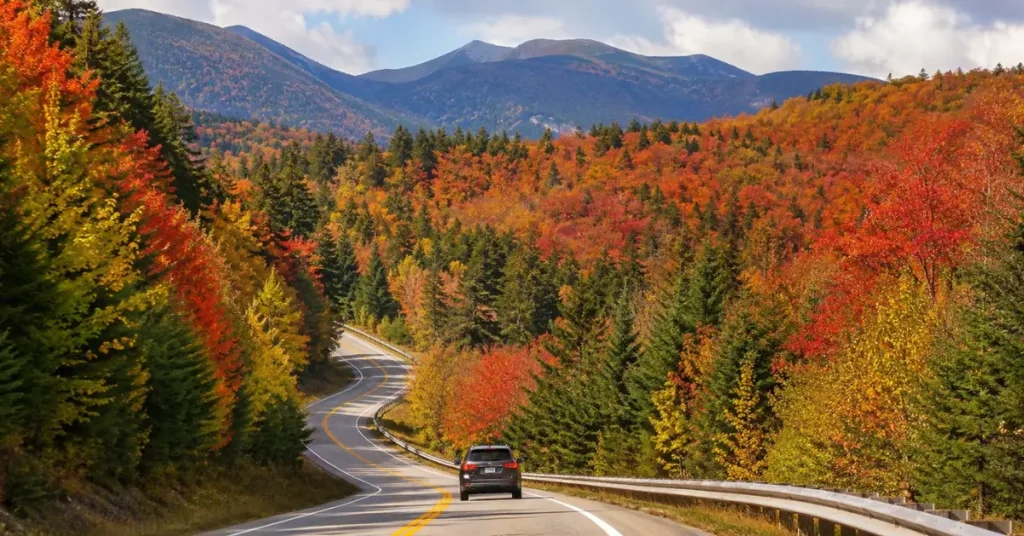
The best New England road trip itinerary covers Boston, Salem, the White Mountains, Vermont, and coastal Maine in a 7-day loop, and it can realistically cost $900 to $1,500 per person if you plan around a few key expenses. The route below cuts unnecessary driving, times hotels around cheaper nights, and mixes free stops with a few paid ones worth the money. Here are 9 practical ways to save without cutting the parts that make the trip worth taking.
New England Road Trip Itinerary at a Glance
Recommended Route
Boston → Salem → White Mountains → Vermont → Coastal Maine → Portland
This loop works because each leg builds on the last: Salem is a short 30 to 40 minute drive from Boston, the White Mountains are roughly two hours north through New Hampshire, Vermont adds another hour and a half west, and the coastal Maine stretch back down to Portland closes the loop in about three hours. None of the individual drives are brutal, which matters more than people expect on a trip built around six stops in one week.
How Many Days Do You Need?
| Trip Length | What You’ll Realistically See | Best For |
|---|---|---|
| 5 days | Boston, Salem, Portland, one inland stop (White Mountains or Vermont) | First-timers with limited time off |
| 7 days | The full loop above at a relaxed pace | Most travelers, the standard version |
| 10 days | Full loop plus extra nights in Vermont and coastal Maine | Travelers who want to slow down, not just check boxes |
| 14 days | Full loop plus Acadia National Park and a detour into Connecticut or Rhode Island | Longer vacations, retirees, remote workers |
9 Smart Ways to Save on a New England Road Trip
1. Build a Route That Cuts Down on Backtracking
The loop above is designed so you’re never driving the same stretch of highway twice. Backtracking sounds minor until you add up the wasted gas and hours: a route that has you doubling back from Vermont to Boston and then out to Maine again can add close to 200 extra miles compared with a clean loop. Map your stops in a circle, not a zigzag, before you book a single night.
2. Choose the Right Starting Airport
Where you fly into changes your total trip cost more than most people realize.
- Boston Logan (BOS) — the most flight options and usually the most competitive fares, but also the most expensive rental car rates and downtown parking
- Portland (PWM) — a smaller airport with fewer routes, but it puts you at the far end of the loop instead of the start, which can simplify a one-way rental
- Manchester, NH (MHT) — often overlooked, frequently cheaper than Logan for domestic flights, and a shorter drive to the White Mountains
- Providence, RI (PVD) — worth checking if you’re starting from the south, sometimes underpriced relative to Logan for the same dates
3. Travel During the Shoulder Season
Spring (April to early June) and fall outside of peak foliage weeks bring noticeably lower hotel rates than summer or the two or three weekends when leaf-peeping crowds hit their max. Weekday travel adds another layer of savings on top of that, since New England hotel pricing swings hard between Friday-Saturday and the rest of the week in tourist towns like Salem, Stowe, and Bar Harbor.
Table of Contents
4. Save on Hotels by Staying Outside the Most Expensive Areas
A hotel three or four miles outside Boston’s downtown core, or in a town just past Portland’s waterfront district, routinely costs 30 to 40 percent less than the same quality room in the middle of the action. You lose a short drive or rideshare, not the experience, since you’re not spending your evenings in the hotel anyway on a road trip like this.
5. Plan Your Gas and Driving Costs Before You Leave
Gas prices across New England have been running higher than usual through 2026, generally in the $3.60 to $4.60 a gallon range depending on the state, with Vermont and Connecticut typically at the higher end and New Hampshire at the lower end. For a 500 to 600 mile loop like the one above, that puts total fuel costs somewhere between $90 and $140 for an average sedan. Add tolls (the Massachusetts Turnpike and Maine Turnpike both charge tolls) and parking in Boston or Portland’s downtown areas, and a realistic driving budget for the full week lands closer to $180 to $250.
6. Mix Free Attractions With Paid Experiences
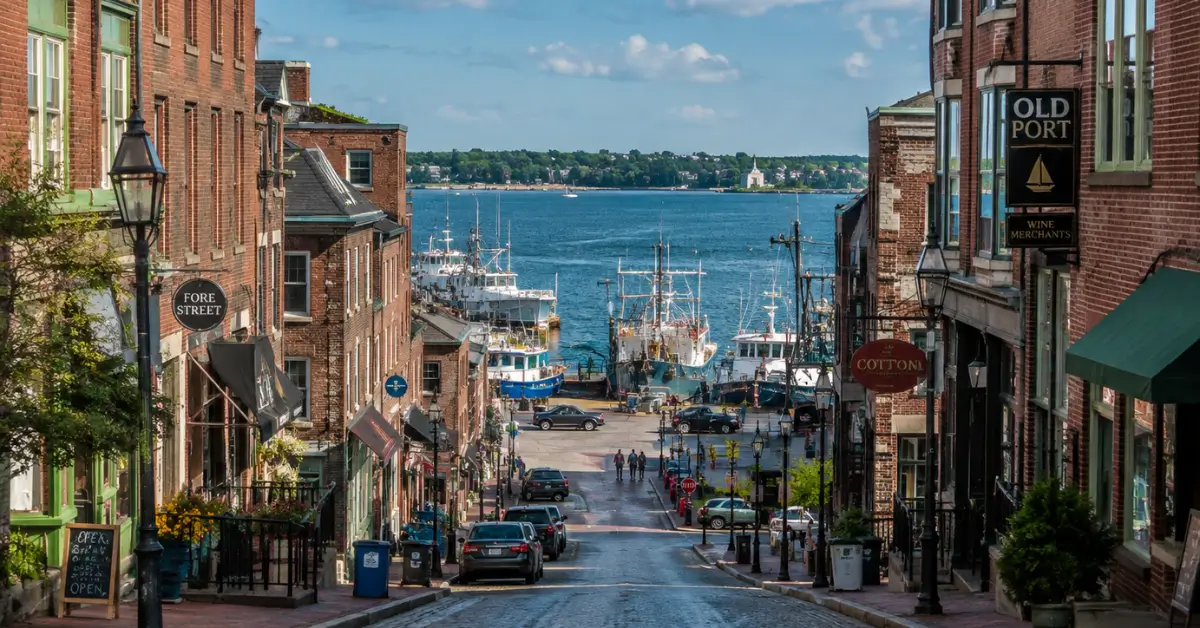
New England doesn’t require paid stops to feel worth the trip. Walking the McIntire Historic District in Salem, driving the Kancamagus Highway through the White Mountains, and wandering Portland’s Old Port are all free. Save your paid-experience budget for the one or two things that are genuinely worth it, like a guided Salem history tour or a White Mountains cable car ride, rather than spreading it thin across every stop.
7. Pack Smart to Avoid Unnecessary Travel Costs
New England weather shifts fast, especially in the mountains, so a single warm layer and a rain shell save you from buying overpriced gear at a tourist shop mid-trip. If you’re flying in, packing light enough to avoid checked bag fees on both legs of the trip is an easy way to shave $60 to $100 off the total cost before you’ve even started driving.
8. Eat Like a Local Instead of Dining Out for Every Meal
A week of three restaurant meals a day in tourist towns adds up fast, often $60 to $90 per person daily. Grabbing breakfast items and lunch supplies from a local grocery store (Hannaford and Market Basket are common across the region) and saving restaurants for dinner cuts that number close to half, without missing the lobster roll or clam chowder stops that are genuinely worth planning around.
9. Compare the Total Cost Before Booking
Add up flight, rental car, gas, hotels, food, parking, and attractions before you commit to a specific week. It’s easy to book a cheap flight and then lose the savings to a rental car surge or a peak-weekend hotel rate. Looking at the full number first tells you whether shifting your dates by even a few days is worth more than any single discount.
A Sample 7-Day New England Road Trip Itinerary
Day 1 — Boston Arrive, settle in, and spend the afternoon in a neighborhood like the North End or Back Bay. Keep it low-key; you’ve got a full week ahead.
Day 2 — Boston to Salem A short 30 to 40 minute drive. Spend the day at the Peabody Essex Museum and walking the historic district before heading back to Boston or pushing on toward New Hampshire.
Day 3 — Salem to New Hampshire Drive north into New Hampshire, roughly two hours depending on your exact stop. Settle in near the base of the White Mountains for the night.
Day 4 — White Mountains Spend the day on the Kancamagus Highway and around the national forest. This is the best single day for scenery on the entire loop.
Day 5 — Vermont About 1.5 to 2 hours west into Vermont. Stowe or Burlington both work well as a base, with easy access to small-town main streets and covered bridges.
Day 6 — Vermont to Coastal Maine A longer driving day, roughly 3 hours, heading back east toward the Maine coast. Break it up with a stop in New Hampshire’s Lakes Region if you have the time.
Day 7 — Portland and Return Spend the morning in Portland’s Old Port before heading to the airport or starting the drive home.
How Much Does a New England Road Trip Cost?
| Expense | Budget Approach | Higher-Cost Option |
|---|---|---|
| Hotels | Budget stays outside city centers | Downtown or waterfront hotels |
| Food | Groceries plus casual meals | Restaurants for every meal |
| Gas | Efficient loop route | Long detours and backtracking |
| Attractions | Free stops plus one or two paid experiences | Mostly paid tours and attractions |
| Parking | Free or low-cost lots outside downtown | Downtown Boston or Portland parking |
How to Build Your Own Road Trip Budget
Start with your two fixed costs, flights and the rental car, since those rarely move once booked. Then estimate gas using the route distance and current regional prices, add a nightly hotel rate multiplied by your trip length, and set a daily food number based on whether you’re grocery shopping or eating out. Most travelers underestimate parking and tolls specifically, so build in an extra $30 to $50 for those alone on a Boston-inclusive route.
Best Time for a New England Road Trip on a Budget
Spring
Lower hotel rates, fewer crowds, but pack for rain and cooler mountain temperatures well into May.
Summer
The most reliable weather and the most expensive hotel rates, especially in coastal towns on weekends.
Fall
Foliage season drives prices up fast for about three specific weeks, usually early-to-mid October depending on the year. Traveling just before or just after peak color keeps costs down while still catching decent foliage.
Winter
The cheapest hotel rates by far, though several White Mountains and Vermont attractions shift toward ski-focused offerings and some coastal Maine stops scale back hours.
What to Book in Advance
- Flights
- Rental car
- Hotels, especially for fall weekends
- Popular attractions with limited capacity
- Guided tours in Salem or the White Mountains
Cheap Flight Deal Checklist: Check Before You Book
- Base fare
- Checked baggage fee
- Carry-on fee (some budget carriers charge separately)
- Seat selection cost
- Which airport you’re actually flying into
- Rental car availability and price at that airport
- Parking cost at your first hotel
- Cancellation and change rules
- The final total price, not just the headline fare
How to Know When You’ve Found a Good Flight Deal
| Check | Good Sign | Warning Sign |
|---|---|---|
| Fare | Competitive final price after fees | Cheap headline fare, expensive add-ons |
| Baggage | Included or clearly priced | Fees buried until checkout |
| Airport | Convenient to your route | Expensive or long transfer to your first stop |
| Schedule | Fits your itinerary without a rushed first day | Long layovers or a late arrival that eats into Day 1 |
| Rules | Reasonable change and cancellation policy | Highly restrictive, no changes allowed |
Common New England Road Trip Mistakes to Avoid
Trying to See Every State
New England has six states packed into a small area, which makes it tempting to hit all of them on one trip. Cutting the list down to three or four lets you actually enjoy each stop instead of spending the whole week in the car.
Underestimating Driving Time
Mountain roads and small-town main streets move slower than highway miles suggest. Add a buffer to any drive that goes through the White Mountains or rural Vermont.
Booking Hotels Only by Nightly Price
The cheapest hotel isn’t a deal if it adds 25 minutes to every trip back from dinner. Weigh location against price rather than sorting by lowest rate alone.
Forgetting Parking Costs
Boston and Portland both charge real money for downtown parking, and it adds up fast across a week-long stay.
Planning Every Meal in Advance
Overplanning meals removes the flexibility to stop at the roadside lobster shack you didn’t know about. Leave at least half your meals unplanned.
Frequently Asked Questions About a New England Road Trip Itinerary
How many days are enough for a New England road trip itinerary?
Five days covers a shortened version with two or three stops. Seven days is the sweet spot for the full Boston-to-Maine loop described above without feeling rushed.
What is the best New England road trip route for first-time visitors?
The Boston, Salem, White Mountains, Vermont, coastal Maine, Portland loop covers the region’s best-known highlights without excessive backtracking, which makes it the most practical starting route for a first trip.
What is the cheapest time to take a New England road trip?
Spring and the weeks just outside peak fall foliage offer the best mix of lower hotel prices and still-decent weather. Winter is cheapest overall but changes what’s open.
How much should I budget for a New England road trip?
For a 7-day trip with a rental car, budget-friendly hotels, and a mix of groceries and restaurant meals, most travelers land somewhere between $900 and $1,500 per person excluding flights, depending on season and how many paid attractions you add.
Is it cheaper to drive or fly around New England?
Driving your own route is almost always cheaper than flying between individual New England cities, since regional flights are often pricier per mile than the equivalent drive, and you’d still need a car once you land.
Which New England states are best for a road trip?
Massachusetts, New Hampshire, and Maine cover the most iconic stops (Boston, Salem, the White Mountains, coastal Maine) in the least driving time. Vermont is worth adding if you have at least 7 days.
Can you do a New England road trip on a budget?
Yes. The gap between a budget version and a splurge version of this same route often comes down to hotel choice and how many meals are restaurant meals, not the destinations themselves.
Final Thoughts
A memorable New England road trip itinerary doesn’t require an unlimited budget. With a smarter route, flexible timing, careful hotel choices, and a mix of free and paid stops, you can see more of the region while spending less on each mile of it.
Ready to plan your next affordable adventure? Explore FlyBudgeter’s guides to cheap flights, budget hotels, and smart travel-saving strategies before you book.