
The best things to do in Bali include walking the tegallalang rice terraces ($0 entry), watching sunrise at Mount Batur ($35 guided hike), surfing Uluwatu’s breaks, visiting Tanah Lot temple at sunset, and hiking to hidden waterfalls most tourists never find. Most of this list costs under $40 a day. Most travelers searching for things to do in Bali open a tab, skim the same recycled list, and end up at the same four spots with everyone else. That’s fine. But it’s not the full picture.
Daniel tracked entry prices, crowd timing, local transport costs, and real traveler feedback across every major area of the island Ubud, Seminyak, Uluwatu, Canggu, and beyond. What came back was 15 experiences that consistently delivered value, whether your budget is $20 a day or $100. Some are famous for good reason. Others don’t make most lists at all. All 15 are worth your time.
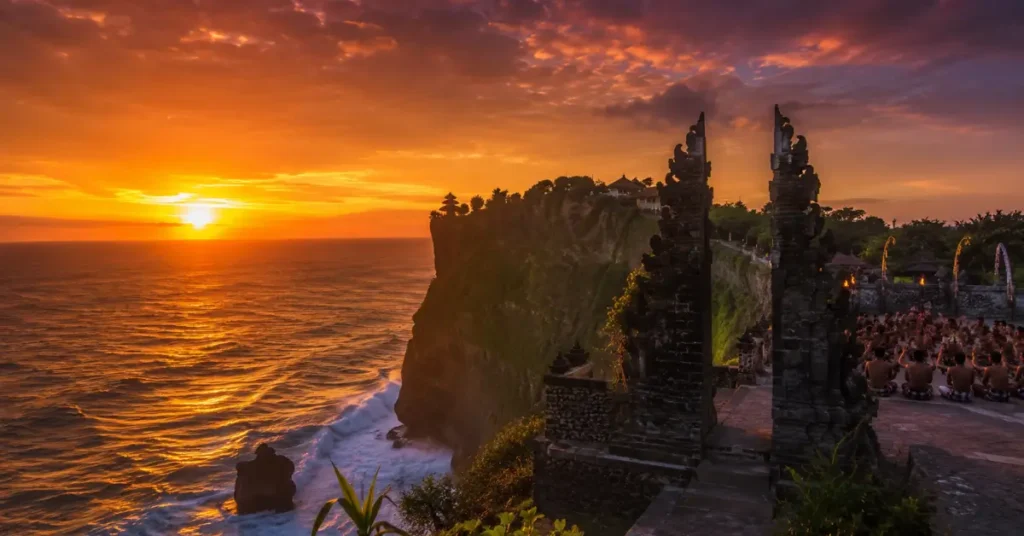
Watch the Sunset at Uluwatu Temple
Uluwatu is the best things to do in Bali for sunset full stop. The temple sits on a 70-meter cliff above the Indian Ocean, and on a clear evening, the light hits the water in a way that’s genuinely difficult to describe without sounding like a travel brochure. It earns the reputation.
Table of Contents
- Why it’s worth visiting: It’s not just a sunset spot. Uluwatu is one of Bali’s six key temples, built into the cliff edge with the ocean on three sides. The Kecak fire dance performance runs at 6 PM daily inside the temple grounds the combination of the ceremony, the cliff, and the fading light makes it one of the more memorable evenings available anywhere on the island.
- Best time to go: Arrive by 5 PM to walk the temple grounds before the crowds settle in for the performance. Sunset hits between 6:15 and 6:45 PM depending on the season. The Kecak dance runs simultaneously position yourself on the western cliff edge for both.
- Entrance fee: IDR 50,000 per person (roughly $3). The Kecak dance is an additional IDR 100,000 ($6). Both are worth paying.
- Budget tip: Skip the tourist transport from Seminyak or Ubud it’s overpriced. Rent a scooter for IDR 70,000 ($4.50) per day and ride down yourself. Parking at Uluwatu is IDR 5,000. Total cost for the evening including both fees: under $12.
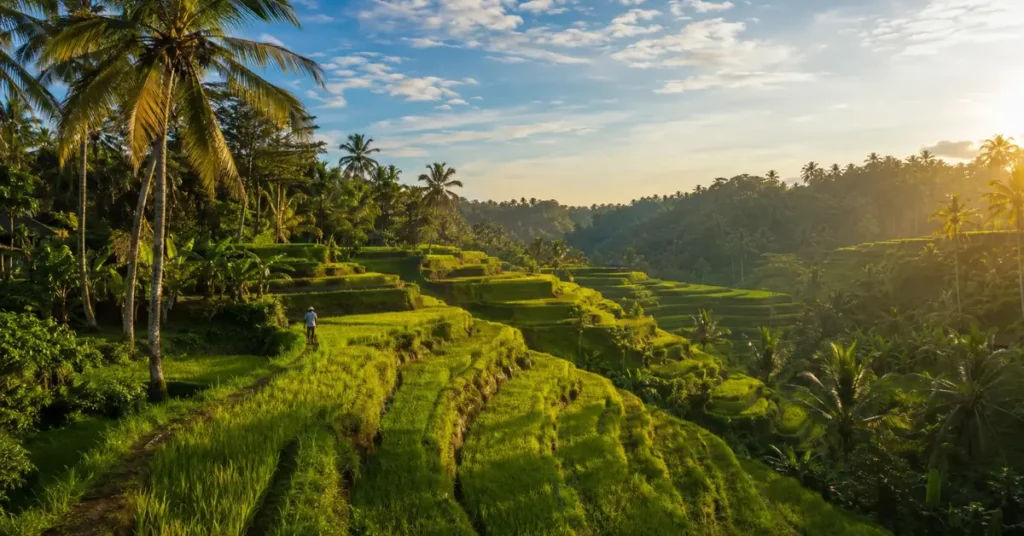
Walk Through the Tegallalang Rice Terraces
The Tegallalang rice terraces are the most photographed landscape in Bali, and unlike most things that earn that title, they deserve it. The terraces cascade down a river valley in layers that have been maintained by the same traditional irrigation system called subak for over a thousand years.
1- What makes them unique: It’s not just the view. The subak system is a UNESCO-recognized cooperative water management network that predates most modern agricultural infrastructure. What you’re looking at isn’t decorative it’s a working farm that’s fed local communities for centuries.
2- Best photo spots: The main viewpoint at the top of the valley is the obvious choice, but the better shots come from the valley floor looking up. Walk down the stepped path into the terraces themselves the perspective from the bottom reverses the scale and makes the layers more dramatic. Early morning light between 7 and 9 AM hits the terraces from the east and eliminates most of the shadow.
3- How to avoid crowds: Tegallalang fills up between 9 AM and 2 PM. Arrive before 8 AM or after 3 PM and you’ll have the main path largely to yourself. Weekday mornings are significantly quieter than weekends. Entry is technically free, though local vendors along the path collect a small voluntary fee of IDR 10,000 to 20,000.
Spend a Day in Ubud
Ubud isn’t a single attraction. It’s a full day minimum and most travelers who try to fit it into a half-day leave having seen the surface.
* Monkey Forest: The Sacred Monkey Forest Sanctuary sits in the center of Ubud and houses around 700 long-tailed macaques across 12 hectares of temple grounds. Entry is IDR 80,000 ($5). Keep your sunglasses, hats, and loose items secured — the monkeys are fast and experienced. It’s worth an hour, genuinely.
* Local market: The Ubud Traditional Art Market opens at dawn and runs until early afternoon. Textiles, carvings, sarongs, and silver jewelry at prices that start high and negotiate down. Arrive before 9 AM for the best selection and the least foot traffic. Don’t pay the first price for anything.
* Coffee shops: Ubud has a better independent coffee scene than most cities in Southeast Asia. Seniman Coffee on Jalan Sriwedari is the best-known, with single-origin Balinese beans and a roastery on-site. Budget IDR 35,000 to 60,000 ($2 to $4) per cup.
* Art streets: Jalan Hanoman and Jalan Dewi Sita are lined with galleries, studios, and workshops where local artists sell directly. No entry fees, no pressure to buy. The batik and woodcarving workshops along these streets are the most accessible introduction to traditional Balinese craft available anywhere on the island.
Relax on Bali’s Most Beautiful Beaches
Bali’s beaches aren’t interchangeable. Each one has a different character, crowd level, and price point. Here’s what separates them.
Nusa Dua: The calmest water on the island. The reef breaks most of the swell before it reaches the beach, making it safe for swimming year-round. It’s also the most resort-heavy stretch of coastline sunbeds and beach clubs dominate. Budget travelers will find it expensive to access the best spots, but the public beach sections are free.
Padang Padang: A small, sheltered beach at the bottom of a steep staircase cut into the cliff. Famous as the filming location for Eat Pray Love, which brings some crowds, but the size of the beach keeps it from getting overwhelmed. Entry IDR 10,000. Best for swimming and snorkeling the water is clear and relatively calm.
Seminyak: The social beach. Sunset at Seminyak is a daily event, with beach clubs, fire performers, and crowds that peak around 5 PM. Ku De Ta and Potato Head are the most well-known venues, but the public beach strip between them is free and delivers the same sunset. Best for people-watching and evening atmosphere rather than swimming.
Bingin: The most underrated beach on this list. A 10-minute walk down a steep path from the road, Bingin sits below the cliffs of the Bukit Peninsula with a left-hand surf break that draws consistent swell. Small warungs at the cliff base serve cold Bintang and grilled fish for IDR 30,000 to 50,000. Fewer tourists, better value, better atmosphere.
Visit Tanah Lot at Low Tide
Tanah Lot is Bali’s most visited temple, and the crowds at peak hours are real. But at low tide in the early morning, it’s one of the more striking sights on the island a 16th-century Hindu temple perched on a rock formation that separates from the shore when the tide comes in.
At low tide, you can walk across to the base of the rock. Priests at the temple offer a blessing with holy water — it’s free, though a small donation is expected. The sea snakes that live in the caves beneath the rock are considered sacred guardians and are genuinely there.
Best time: Arrive at 7 AM on a low tide day. Tide tables are widely available online check before you go. Sunset draws the largest crowds; morning visits are significantly quieter with better light for photography.
Entry fee: IDR 60,000 ($4). Worth it at the right tide.
Things to Do in Bali: Hike Mount Batur at Sunrise
Mount Batur is a 1,717-meter active volcano in Bali’s central highlands, and the sunrise hike is the most consistently rewarding early morning experience on the island. The crater lake below and the shadow the volcano casts across the valley at first light are worth the 3 AM alarm.
The hike takes 2 hours up and 1.5 hours down on a clear trail. A guide is officially required IDR 350,000 to 450,000 ($22 to $28)and the requirement exists for good reason. The upper section has loose volcanic rock and several trail splits that are easy to miss in the dark.
Budget tip: Book directly with a local guide in Kintamani village rather than through a tour operator in Ubud or Seminyak. The experience is identical and the price drops by 30 to 40 percent. Start the drive up by 2:30 AM from Ubud.
Take a Day Trip to Nusa Penida
Nusa Penida is the most dramatic landscape accessible from Bali and consistently the answer when travelers ask what they wish they’d prioritized. It’s a 45-minute fast boat from Sanur ($15 to $20 round trip) to an island with cliffs, beaches, and viewpoints that look like they were designed specifically to be photographed.
Kelingking Beach the T-Rex shaped cliff formation is the most shared image from Nusa Penida and worth the hike down to the beach. Angel’s Billabong and Broken Beach sit within 10 minutes of each other at the island’s west end. Crystal Bay on the north coast has some of the clearest snorkeling water in the region.
One important detail: Roads on Nusa Penida are rough and navigation is confusing without local knowledge. Hire a local driver for the day (IDR 300,000 to 400,000 / $19 to $25) rather than renting a scooter. The driver will cover all four main sites in a single day without the stress of navigation on bad roads.
H2: Experience a Traditional Balinese Spa
A traditional Balinese massage is not an add-on to the trip. It’s one of the more genuinely restorative things you’ll do in Bali, and the price difference between a local spa and a resort spa is significant without any difference in quality.
Local spas in Ubud and Seminyak charge IDR 100,000 to 150,000 ($6 to $9) for a 60-minute Balinese massage a combination of stretching, acupressure, and long strokes that’s distinct from Thai or Swedish techniques. The same service at a five-star resort runs IDR 500,000 to 800,000 ($31 to $50).
Best areas: Ubud has the highest concentration of quality local spas. Jalan Hanoman and the surrounding streets have dozens of options with walk-in availability. Book 30 minutes ahead during peak season April through September to guarantee a slot.
Try Authentic Balinese Food
Most tourists in Bali eat at restaurants designed for tourists. That’s a significant miss authentic Balinese food is genuinely different from generic Indonesian food, and the best version of it costs almost nothing at a local warung.
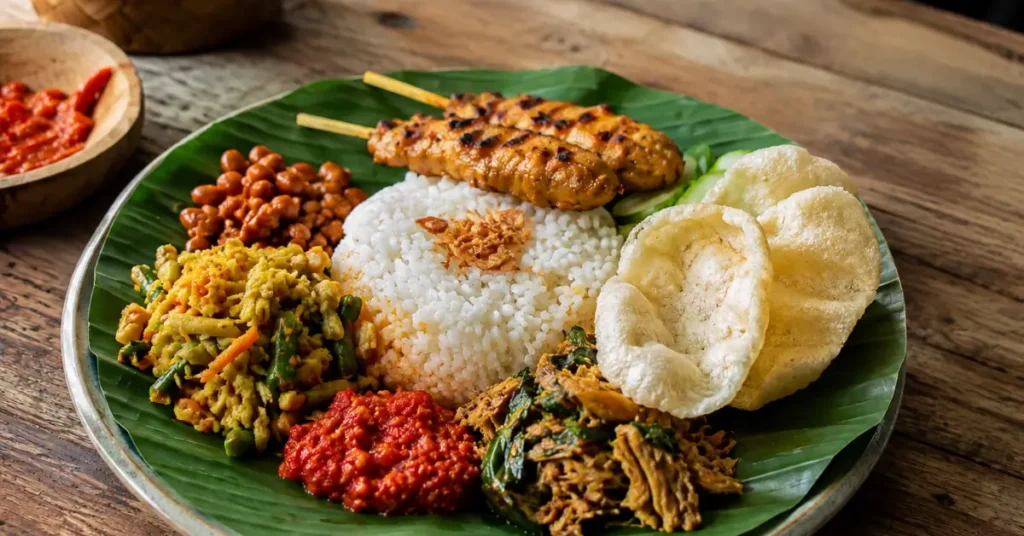
What to eat:
Nasi campur is the foundation steamed rice surrounded by small portions of vegetables, meat, tempeh, and sambal. At a local warung it runs IDR 20,000 to 35,000 ($1.25 to $2.20) and changes daily based on what’s cooked that morning.
Babi guling (suckling pig) is Bali’s most ceremonial dish and the one that doesn’t exist in the same form anywhere else in Indonesia. Ibu Oka in Ubud is the most famous spot and worth the queue a full portion with rice costs IDR 85,000 ($5.30).
Lawar is a minced meat and vegetable dish mixed with fresh blood and spices. It’s not available at tourist restaurants. Find it at a local warung in Ubud’s market area early in the morning.
Average prices at a local warung: IDR 20,000 to 50,000 ($1.25 to $3) per meal including a drink. Budget IDR 100,000 ($6.25) for a full day of eating well at local prices.
Budget recommendation: Eat breakfast and lunch at warungs. Reserve one dinner for a mid-range restaurant. Total daily food spend at this ratio: under IDR 150,000 ($9.50).
Where to Stay in Bali
Where to stay in Bali depends entirely on what you want from the trip. The three main areas serve different types of travelers.
Ubud is for travelers who want culture, nature, and quiet. Rice terraces, temples, and yoga studios within walking distance. Best for first-time visitors who want to understand Bali beyond the beach. Budget guesthouses from $15 per night. → [Full guide: Best Budget Hotels in Bali]
Seminyak is for travelers who want beach access, restaurants, and nightlife within walking distance. More expensive than Ubud, more international in character. Budget options exist but require searching. From $25 per night.
Canggu is for digital nomads, surfers, and long-stay travelers. Strong café culture, consistent surf break at Echo Beach, and a community feel that Seminyak doesn’t have. Prices have risen sharply since 2022 but remain lower than Seminyak for comparable quality. From $20 per night.
Budget Tips for Visiting Bali
Bali on a budget is genuinely achievable $40 a day covers accommodation, food, transport, and most entry fees without cutting anything essential.
Cash: Bali runs on cash. ATMs are widely available but charge IDR 50,000 to 75,000 ($3 to $4.70) per withdrawal. Withdraw larger amounts less frequently to minimize fees. Never exchange money at the airport rates are 15 to 20 percent worse than in-town money changers. Use authorized money changers on Jalan Legian in Kuta or Central Kuta Money Changer in Seminyak.
Scooters: IDR 70,000 to 100,000 ($4.50 to $6.30) per day from local rental shops. This is the most practical transport option for most of Bali outside central Ubud. An international driving permit is technically required carry it. Helmet is included in the rental.
SIM cards: Buy a local SIM at the airport or any minimart. Telkomsel and XL Axiata both offer tourist SIM cards with 30GB of data for IDR 100,000 to 150,000 ($6.30 to $9.40). This covers navigation, translation, and communication for a 2-week trip without relying on hotel WiFi.
Transport: Grab (Southeast Asia’s Uber equivalent) operates in Bali’s southern areas and is significantly cheaper than negotiated taxi fares. Use it for trips within Seminyak, Kuta, and Canggu. For trips to Ubud or Uluwatu, hire a private driver for the day IDR 400,000 to 600,000 ($25 to $37.50) covers 8 to 10 hours and multiple stops.
FAQs
What are the best things to do in Bali for first-time visitors?
Start with Uluwatu at sunset, a morning in Tegallalang, and a full day in Ubud. These three cover Bali’s landscape, culture, and atmosphere without requiring more than 3 days. Add Nusa Penida as a day trip if time allows it’s the most dramatic single-day addition available from the main island.
How many days do you need to explore Bali?
7 days covers the main experiences without rushing. 10 to 14 days allows for Nusa Penida, slower days in Ubud, and time in more than one coastal area. Less than 5 days means making real choices about what to skip.
What is the best time to visit Bali?
April to October is dry season the safest choice for outdoor activities, hiking, and beach days. May, June, and September hit the sweet spot before and after the peak July-August crowds. November through March brings rain, lower prices, and greener landscapes. The rain is usually intermittent rather than all-day.
Is Bali expensive for tourists?
No. Bali on a budget of $40 to $50 per day is comfortable accommodation, local food, transport, and entry fees all fit inside that number. The main costs that push budgets higher are beach clubs, resort spas, and tourist-facing restaurants, all of which are optional.
What are the best free things to do in Bali?
Tegallalang rice terraces (voluntary donation only), walking Seminyak beach at sunset, exploring Ubud’s art streets, and visiting local temples during open hours (sarong rental required, usually IDR 15,000). Most of Bali’s natural landscape is accessible for free or near-free.
What are the best beaches to visit in Bali?
Bingin for atmosphere and value, Padang Padang for swimming and scenery, Seminyak for sunset and social energy, Nusa Dua for calm water. Nusa Penida’s Kelingking Beach is the most dramatic but requires a boat trip.
Where should I stay in Bali for the first time?
Ubud for a culture-first trip. Seminyak or Canggu for a beach-first trip. Ubud is the more common recommendation for first-timers because it offers a broader introduction to what makes Bali distinct from other beach destinations in Southeast Asia.
Is Bali safe for solo travelers?
Yes. Bali is one of the more solo-traveler-friendly destinations in Southeast Asia. Petty theft and scooter bag snatching occur but are avoidable with basic precautions. Solo female travelers report feeling comfortable across most areas. Standard travel awareness applies don’t leave valuables visible, use Grab rather than unmarked taxis at night.
Can you visit Bali on a budget?
Yes. $35 to $50 per day covers everything for a genuinely good trip local food, guesthouse accommodation, scooter rental, and entry fees. The main budget pressure is accommodation in peak season (July and August), when prices across all categories rise 20 to 40 percent.
What should I not miss when visiting Bali?
Uluwatu at sunset, Tegallalang at dawn, a full day in Ubud, Nusa Penida as a day trip, and at least one meal of babi guling at a local warung. These five cover the landscape, culture, and food that make Bali worth the trip.