
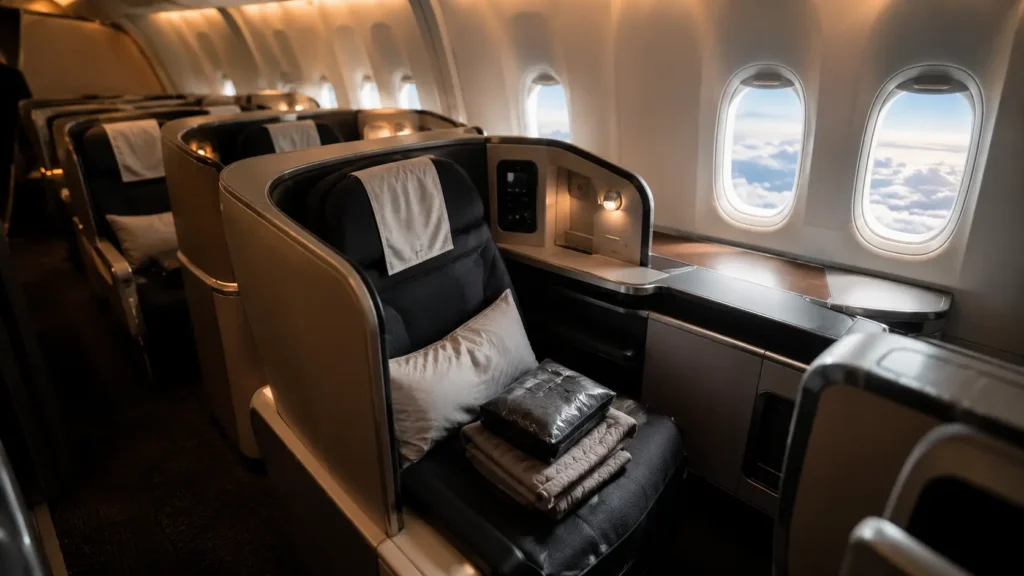
How to get cheap business class flights without using miles? The answer is simpler than most travelers think. You don’t need elite status or a mile balance in the hundreds of thousands to sit in a premium cabin. Book at the right time, compare fares across a few platforms, stay flexible on your dates, and use a handful of lesser-known pricing tricks, and you can often save hundreds, sometimes thousands, off a business class ticket. This guide walks through nine strategies experienced travelers actually use to find lie-flat seats for a lot less than sticker price.
Table of Contents
Compare today’s business class flight deals before prices change.
Is It Really Possible to Get Cheap Business Class Flights Without Using Miles?
Yes, and it’s more common than people assume. Airlines sell unsold business class deals through several channels beyond their own website, and cash fares on the right route, at the right time, can beat what most people pay in miles.
Why business class prices vary so much. The same seat on the same route can swing by thousands of dollars depending on demand, how far out you book, and even which day of the week you fly. Airlines also swap aircraft on the same route depending on the day, so a Tuesday departure might use a newer plane with a better business cabin than the Saturday flight at the same price.
The biggest myth about premium cabins. Most people assume business class is either “pay full price” or “redeem miles.” In reality, a large share of premium seats get sold through consolidators, fare sales, and upgrade programs, at prices well below the fare shown on the airline’s main booking page.
When paying cash is actually cheaper than using miles. If your miles are worth more spent elsewhere, or if award availability on your route is poor, a discounted cash fare can beat burning six figures of points. Compare the cash price against what those miles would be worth in economy before you decide.
Strategy 1: Book Your Flight at the Right Time
How Far in Advance Should I Book a Flight?
Best booking window. For business class specifically, a window of roughly two to five months before departure tends to deliver the best mix of price and seat availability.
Domestic vs international flights. Domestic business class often gets cheaper closer to departure, sometimes three to six weeks out, as airlines try to fill unsold premium seats. International routes usually reward booking earlier, since demand for lie-flat seats on long-haul flights builds up fast.
Business class booking timeline. Set a price alert as soon as you know your travel dates, then track the fare for a few weeks before committing. Prices rarely move in a straight line, so a short waiting period often reveals a better price than booking on day one.
Strategy 2: Compare Business Class Prices Before Booking
Airline Websites vs Flight Comparison Platforms
Why prices differ. Airlines price the same seat differently depending on the sales channel. A fare that looks locked-in on the airline’s own site can be noticeably cheaper through a flight comparison tool or a consolidator that buys premium inventory in bulk.
Hidden deals. Consolidators and bulk-fare sellers often list business class seats 30 to 60 percent below retail, since they’re moving inventory the airline hasn’t sold on its own.
Flexible search tools. Tools that map the cheapest business class fare from your home airport to anywhere in the world are worth a few minutes of your time. Leaving the destination open sometimes surfaces routes you never would have searched for directly.
Strategy 3: Be Flexible With Your Travel Dates
Weekday Flights vs Weekend Flights
Cheapest days. Midweek departures, especially Tuesday and Wednesday, are typically cheaper than Friday or Sunday flights, when business and leisure demand overlap.
Best departure times. Early morning and late-night flights tend to be less popular, and less popular usually means less expensive in a premium cabin.
Seasonal pricing. Business class fares dip during traditional low season, think January and February for many long-haul routes, and spike around major holidays. Shifting your trip by even a week or two outside peak dates can cut the price significantly.
Strategy 4: Fly From Alternative Airports
Major Airports vs Nearby Airports
Real savings. A secondary airport an hour or two away can sometimes offer a business class fare hundreds of dollars lower than the main hub, especially on routes with more than one carrier competing for the same passengers.
When it’s worth the extra journey. If the fare difference covers your ground transportation with room to spare, and the schedule still works for your trip, the detour usually pays for itself.
Strategy 5: Mix Airlines Instead of Booking One Carrier
Single Airline vs Mixed Airlines
Pros. Booking each leg with a different airline lets you pick the best business class product and the best price for each segment, rather than settling for one carrier’s fare the whole way.
Cons. Mixed tickets usually mean separate check-ins, no automatic bag transfer, and no protection if one leg is delayed and you miss the next. You’re responsible for your own connection.
When mixed tickets save money. This strategy works best on routes with a long layover you control yourself, or when one airline’s business class is dramatically cheaper for just one leg of the trip.
Strategy 6: Watch for Business Class Sales and Fare Mistakes
Regular Fares vs Promotional Deals
Airline sales. Airlines run periodic sales on premium cabins, often tied to a new route launch or a slow booking period. These sales aren’t always advertised loudly, so a price alert is the easiest way to catch one.
Error fares. Pricing mistakes happen when an airline’s system misprices a route, sometimes cutting the fare by 70 to 90 percent. They get fixed within hours, so booking fast and reading the fare rules before you celebrate matters.
Flash discounts. Short-lived discounts tied to a specific route or date range show up more often than people expect. Following a couple of dedicated deal-alert sources makes them easier to catch.
Strategy 7: Upgrade Strategically Instead of Buying Business Class
Economy + Upgrade vs Buying Business Class Directly
Upgrade offers. Some airlines email a discounted upgrade offer after you book economy, priced well below the standalone business class fare.
Airport upgrades. Asking politely at check-in or the gate occasionally works, especially on a lightly booked flight, though it’s the least reliable option on this list.
Bidding systems. Several airlines now run auction-style upgrade systems where you bid on an unsold business class seat close to departure. Bidding low and being willing to lose the bid costs nothing but a few minutes.
Strategy 8: Consider Cheap First Class Flights Instead
How to Get Cheap First Class Flights
Business Class vs First Class. First class usually costs two to three times more than business class, in both cash and miles, so it rarely makes sense to pay full price for it.
When first class can actually cost less. Occasionally, award availability quirks mean a first class seat opens up on points when business class on the same flight is sold out, or a first class fare sale undercuts the standard business fare on that route.
Is it worth paying the difference? For most travelers, no. Business class already covers the lie-flat seat and priority service that matters most on long flights. Chasing cheap first class flights only makes sense if the price gap is unusually small.
Strategy 9: Use Smart Travel Booking Tools
Flight comparison tools pull fares from hundreds of airlines and sellers at once, so you’re not checking each one manually.
Price alerts notify you the moment a fare on your route drops, which matters most for premium cabins where prices move fast.
Flexible calendars show a full month of pricing at a glance, making it easy to spot the cheapest day to fly without guessing.
Fare tracking tools that monitor a booked ticket and rebook automatically when a lower price appears can recover money after you’ve already booked.
Business Class vs Economy: Is It Worth Paying More?
| Feature | Economy | Business Class |
| Seat Comfort | Fixed recline, tight pitch | Lie-flat or near lie-flat, wide pitch |
| Meals | Basic tray service | Multi-course dining, better ingredients |
| Lounge Access | Not included | Usually included at major hubs |
| Baggage | Limited free allowance | Higher weight and bag limits |
| Overall Value | Best for short flights on a budget | Best for long-haul or overnight flights |
Common Mistakes That Make Travelers Pay Too Much for Business Class
- Booking too early, before fare sales or upgrade auctions for your date have opened up.
- Booking too late, after airlines have already raised prices as the flight fills.
- Not comparing fares across more than one site before paying.
- Ignoring nearby airports that could offer the same route for less.
- Flying during peak demand without checking if shifting a few days changes the price.
- Not setting price alerts, which means missing drops that only last a day or two.
Frequently Asked Questions About How to Get Cheap Business Class Flights
How can I get business class flights without using miles?
Compare cash fares across multiple platforms, book within the two-to-five-month window before departure, stay flexible on dates, and watch for consolidator pricing or upgrade auctions closer to your flight.
How far in advance should I book a business class flight?
Two to five months ahead generally works best for international routes. Domestic business class can sometimes get cheaper just a few weeks before departure.
Are business class sales real?
Yes. Airlines periodically discount premium cabins, especially on new routes or during slower booking periods. A price alert is the easiest way to catch one before it ends.
Is it cheaper to upgrade after booking?
Sometimes. A discounted upgrade offer or a low winning bid in an upgrade auction can beat the standalone business class fare, but it’s not guaranteed, so compare both options before you commit.
Can first class ever be cheaper than business class?
Occasionally, usually due to an award availability quirk or a fare sale that undercuts the standard business price on that specific flight. It’s the exception, not the rule.
Which websites compare business class fares?
Flight comparison platforms that search multiple airlines and consolidators at once give you the clearest picture, since airline websites only show their own inventory.
Conclusion: How to Get Cheap Business Class Flights Starts With Smarter Booking
How to get cheap business class flights really comes down to timing and a bit of legwork. Track fares two to five months out, stay open to shifting your dates by a few days, check a comparison site alongside the airline’s own page, and don’t ignore an upgrade auction just because it feels like a long shot. None of these strategies require a six-figure mileage balance, just a willingness to compare prices before you click buy.
Ready to book business class for less? Compare today’s best business class flight deals and find the lowest fares before prices go up.
Has anyone found affordable and low-priced flights?
A practical, easy-to-follow guide with smart strategies for finding cheaper business class flights without using miles.
