
Researched and written by Daniel Brooks
Planning your trip to Tokyo? Compare hotel prices across trusted booking platforms and find the best neighborhood before you book.
Best areas to stay in Tokyo depend on your budget and travel style, and the right answer changes from one traveler to the next. If you’re visiting Tokyo for the first time, Shinjuku is usually the safest choice, since it puts the whole city within easy reach of a single train line. Ueno works well if you’re watching your budget, Asakusa gives you a more traditional, local atmosphere, and Shibuya suits anyone chasing shopping and nightlife. Here’s how to actually choose the right neighborhood for your trip, not just a list of names.
What Is the Best Area to Stay in Tokyo?
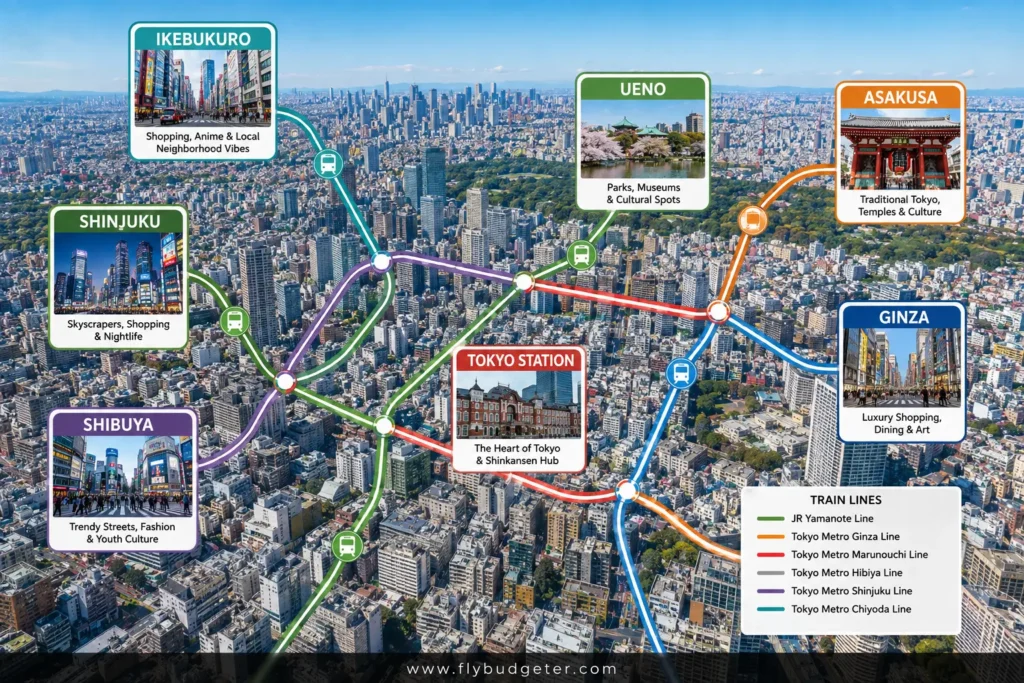
If you only read one section, make it this one. For most travelers, the best area to stay in Tokyo is Shinjuku, and the reason comes down to one simple rule: staying within a five-minute walk of a station on the JR Yamanote Line keeps everything else in your trip negotiable. Shinjuku sits on that line, hosts the busiest train station in the world, and puts nearly every major sight within a 30-minute ride.
That said, the best area of Tokyo to stay in isn’t the same for everyone. Couples who want calmer evenings often prefer Ginza or the Tokyo Station area. Families lean toward Ueno or Asakusa, where nights are quieter after 10 p.m. Younger travelers chasing nightlife tend to land in Shibuya. The “best” answer is really the neighborhood that matches how you actually want to spend your evenings, not just your days.
What Are the Best Neighborhoods to Stay in Tokyo?
What are the best neighborhoods to stay in Tokyo comes down to seven names that cover almost every kind of trip:
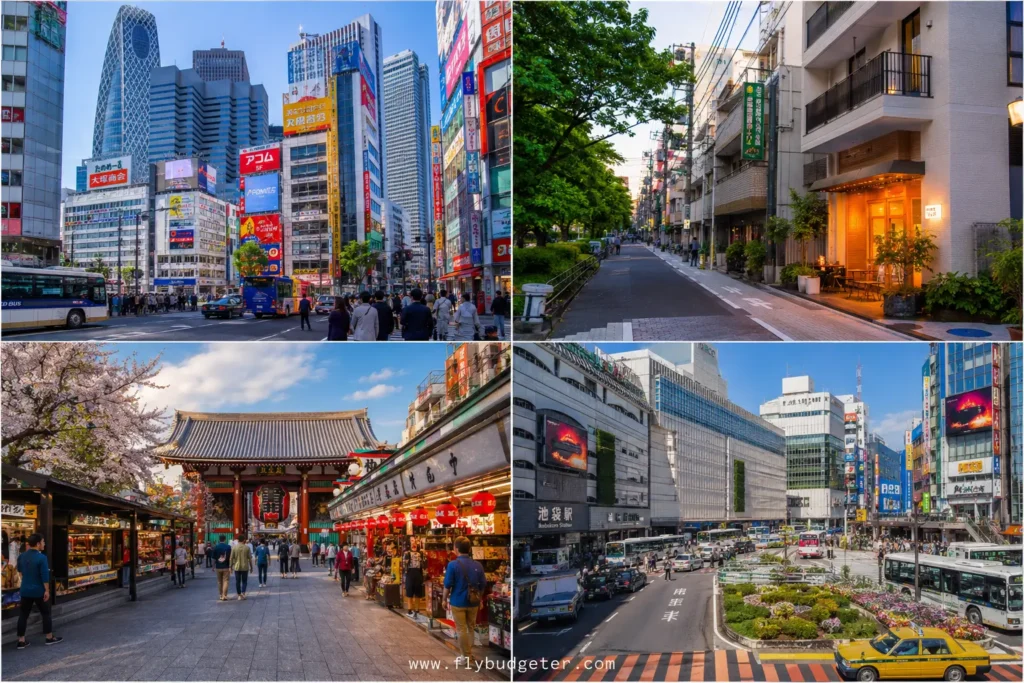
Shinjuku. The most practical base in Tokyo for a first visit. The station itself is intimidating on paper, the busiest in the world, but in practice it’s well signed and connects you to nearly everywhere else. Expect mid-range rates around ¥12,000 to ¥30,000 a night, with the west side calmer and the east side (Kabukicho) loud well past midnight.
Ueno. A working neighborhood first, a tourist base second, which keeps prices down without pushing you to the edge of the city. It’s strong for families thanks to the zoo, museums, and parks nearby, and hotel rooms here tend to run larger than the city average for the same price.
Table of Contents
Asakusa. Tokyo’s most traditional pocket, built around Senso-ji Temple. Flat terrain, quieter streets after dark, and some of the best value-for-money hotels and guesthouses in the city, including a growing number of apartment-style stays aimed at families.
Shibuya. The district most people picture when they think of Tokyo, famous for its crossing and a magnet for shopping and nightlife. The area around Shibuya Stream and the south exit is noticeably calmer at night while staying a short walk from the energy, and it connects directly to the JR Yamanote Line plus several lines toward Yokohama.
Ginza. Tokyo’s most polished district, home to flagship luxury boutiques and the city’s highest concentration of Michelin-starred restaurants. Expect luxury rates from roughly ¥30,000 to ¥100,000+, though nearby Tsukiji and Shiodome offer a gentler price for a similar level of calm.
Ikebukuro. Less polished than Ginza, less iconic than Shibuya, but a genuine transit hub in its own right with anime and gaming culture, big shopping complexes, and rates that consistently undercut the flashier districts for comparable rooms.
Tokyo Station / Marunouchi. The commercial heart of the city and the single most convenient base for anyone planning day trips by Shinkansen. It sits right next to Ginza, so you get central-Tokyo convenience with a slightly more business-district feel after dark.
Where Is the Best Area to Stay in Tokyo for Your Travel Style?
Where is the best area to stay in Tokyo really depends on who’s traveling, not just what you want to see.
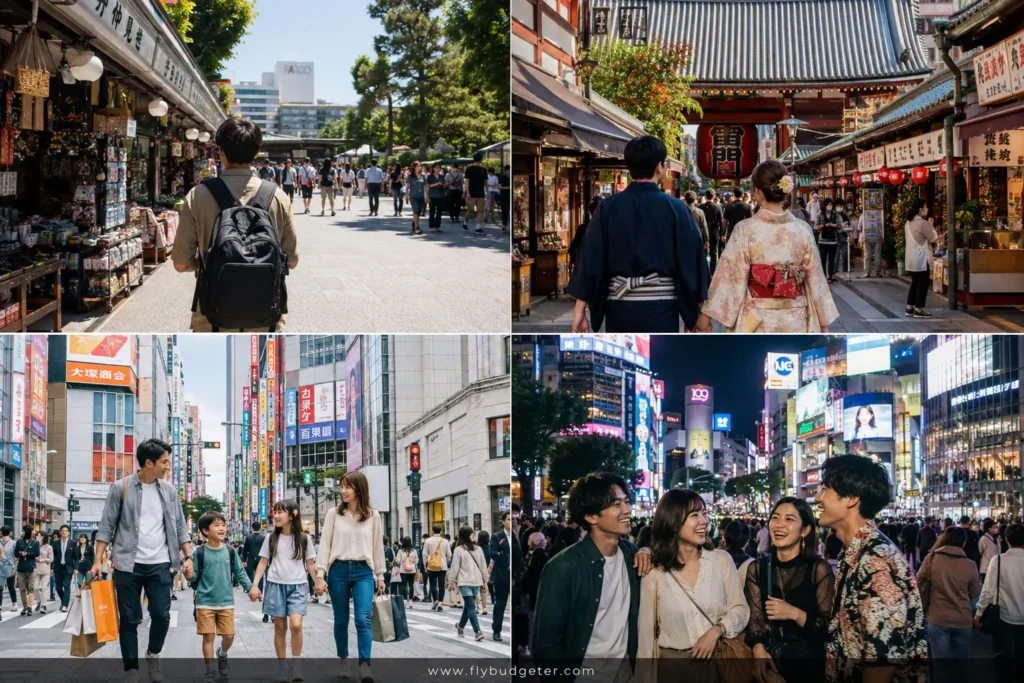
First-time visitors. Shinjuku or Shibuya, for the full-volume version of Tokyo with unbeatable transit. If you’d rather ease in gently, Tokyo Station/Marunouchi offers the same convenience with a calmer edge.
Families. Ueno, for its zoo, museums, and larger-than-average hotel rooms, or Asakusa for flat, walkable streets and quiet evenings. Ginza also works well for families since its nights settle down early.
Couples. Ginza or the Tokyo Station area, for upscale dining, polished streets, and evenings that don’t spill into loud nightlife.
Solo travelers. Shibuya or Ikebukuro, both walkable, well connected, and dense with cheap, solo-friendly food options.
Budget travelers. Ueno or Asakusa, where nightly rates run noticeably lower than the western side of the city without sacrificing train access.
Luxury travelers. Ginza, for the highest concentration of five-star hotels, flagship boutiques, and fine dining within walking distance of each other.
Best Areas to Stay in Tokyo Compared
| Neighborhood | Typical Nightly Rate | Best For | Nightlife Level |
|---|---|---|---|
| Shinjuku | ¥12,000–30,000 | First-time visitors, transit access | Loud (east side), calm (west side) |
| Ueno | ¥8,000–20,000 | Families, budget travelers | Quiet |
| Asakusa | ¥8,000–20,000 | Traditional atmosphere, families | Quiet |
| Shibuya | ¥12,000–30,000 | Shopping, nightlife, solo travelers | Loud |
| Ginza | ¥30,000–100,000+ | Luxury travelers, couples | Quiet after 10 p.m. |
| Ikebukuro | ¥10,000–25,000 | Budget travelers, solo travelers | Moderate |
| Tokyo Station / Marunouchi | ¥15,000–25,000+ | Shinkansen day-trippers, business visitors | Quiet |
How to Choose the Best Area Before Booking Your Hotel
Start with your travel style, not the map. Decide whether your priority is nightlife, quiet evenings, family space, or luxury, and the neighborhood list above narrows itself fast.
Then check the exit number, not just the station name. Tokyo stations are enormous, and the wrong exit can add fifteen minutes to every trip you take. Confirm which exit your hotel sits closest to before booking.
Keep your stay to one or two bases. For trips of five nights or fewer, staying in a single neighborhood usually beats splitting across two. For longer trips, splitting between a first half in Shinjuku or Shibuya and a second half in Asakusa works well, especially if you want a quiet morning near the temples before flying out.
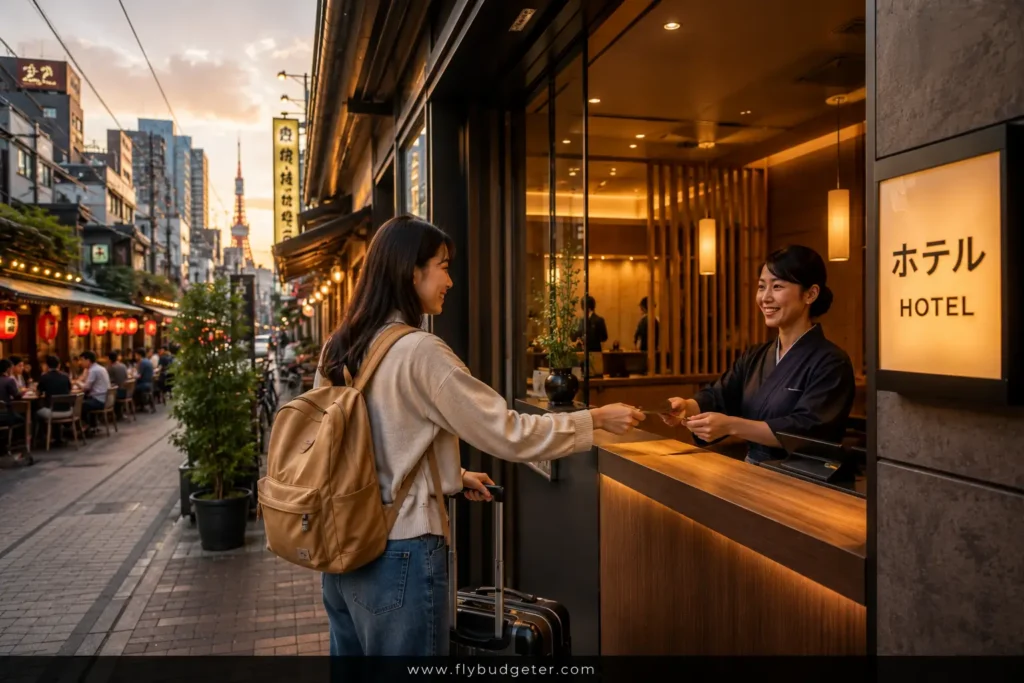
Book early for peak season. Cherry blossom season in spring and the autumn foliage weeks both drive prices up fast, so booking four to six months ahead gives you the best mix of price and availability. Most reputable Tokyo hotels offer free cancellation when booked this far out, so locking in a room early carries little downside.
Frequently Asked Questions About the Best Areas to Stay in Tokyo
What is the best area to stay in Tokyo for first-time visitors?
Shinjuku, for its unmatched transit connections and sheer variety of hotels and dining. Tokyo Station/Marunouchi is a strong runner-up if you’d rather start somewhere calmer.
What are the best neighborhoods to stay in Tokyo on a budget?
Ueno and Asakusa consistently offer the lowest nightly rates among well-connected neighborhoods, without pushing you far from the main train lines.
Where is the best area to stay in Tokyo with family?
Ueno, thanks to its zoo, museums, and larger hotel rooms, or Asakusa for flat, walkable streets and quiet nights. Ginza also suits families who want calm evenings closer to the city center.
Is Shinjuku or Shibuya better?
Both sit on the JR Yamanote Line and offer excellent access to the rest of the city, so neither is a wrong choice. Shinjuku edges ahead for sheer transit convenience and hotel variety, while Shibuya suits travelers who want to be closer to shopping and youth-driven nightlife.
Is Ueno a good place to stay?
Yes, especially for families and budget-conscious travelers. It trades a bit of nightlife energy for lower prices, bigger rooms, and easy access to some of Tokyo’s best museums and parks.