
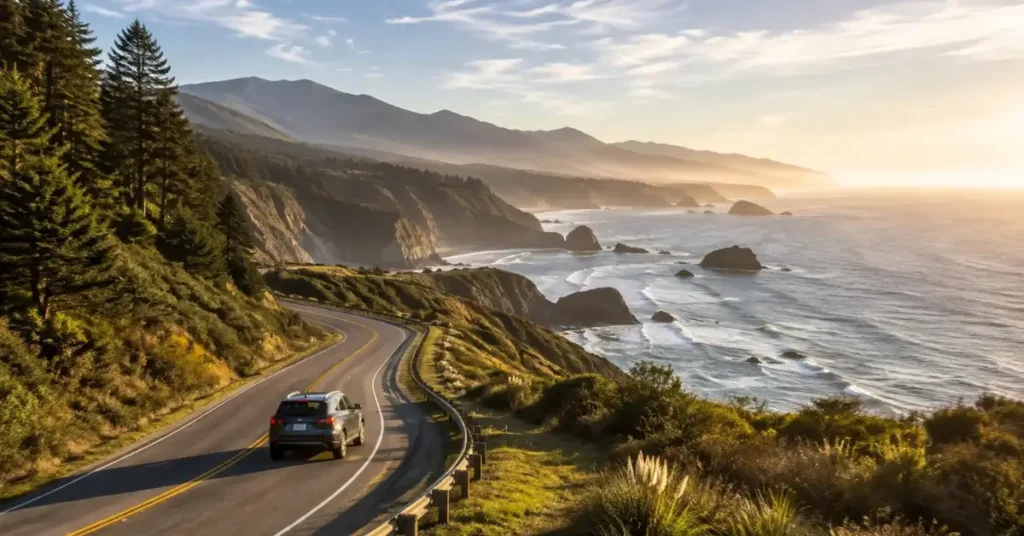
This guide is built to help you travel West Coast road trip routes with confidence, from misty redwood forests to sun-soaked beaches. A West Coast road trip is one of those experiences that sounds simple on paper pack the car, pick a direction, and drive. But once you actually start planning, you quickly realize there is a lot to think about. Which cities do you stop in? How many days do you really need? And how do you enjoy all of it without draining your savings account?
This guide breaks down everything in a practical way. You will find 10 incredible stops worth building your trip around, honest route advice, and real budget tips that actually help you save money without cutting the fun out of your trip.
| West Coast Road Trip – Quick Facts | |
| Typical route length | 800 to 1,400 miles, depending on your start and end point |
| Best time to go | Late spring through early fall (May to September) |
| Recommended trip length | 7 to 14 days for a comfortable pace |
| Average daily budget | $100 to $250 per day, depending on your travel style |
Why the West Coast Is One of the Best Road Trips in the World
Few drives in the world offer this much variety in one route. Within a single trip, you can watch the sunset over the Pacific Ocean, walk through ancient redwood forests, wander through busy city streets, and stand at the edge of a national park cliff. It genuinely feels like several different vacations rolled into one.
The other reason this trip works so well is flexibility. You can drive it in a week if your schedule is tight, or stretch it into a month if you want to slow down and explore side roads. There is no single “correct” way to do it, which is part of what makes it so appealing for first-time road trippers and experienced travelers alike.
A Quote Worth Remembering
“The best road trips aren’t measured by how many miles you cover, but by how many times you stopped the car just to look.”
Planning Your Route Before You Hit the Road
Before jumping into the list of stops, it helps to think through the basic shape of your trip. Two decisions matter more than anything else: your direction of travel and how many days you can realistically spend.
Choose Your Starting Point and Direction
Most travelers drive either from Seattle down to San Diego, or from San Diego up to Seattle. Both directions work well, but there is one small detail worth knowing.
Table of Contents
If you drive south to north, the ocean will be on your right side for most of the trip. If you drive north to south, the ocean sits on your right instead. This might sound minor, but it actually affects how easy it is to pull over at scenic viewpoints along narrow coastal roads. Many travelers prefer driving south, since more of the best viewpoints along Highway 1 are easier to reach from that direction.
Decide How Many Days You Really Need
This is where a lot of people either overpack their schedule or underestimate how much time they need. Here is a realistic breakdown to help you plan.
| Trip Length | Realistic Pace | Best For |
| 7 days | Fast, one to two major stops per day | Travelers with limited vacation time |
| 10 to 14 days | Balanced, time to explore each stop | Most travelers the sweet spot |
| 3 weeks or more | Relaxed, room for detours and rest days | Remote workers and slow travelers |
Important note: Try not to plan more than one major stop per day. It is tempting to pack the itinerary full, but the drive itself takes longer than most people expect, especially on winding coastal roads.
Travel West Coast Road Trip
10 Incredible Adventures Along the West Coast
Now for the part you have been waiting for. These are ten stops that consistently make a West Coast road trip feel unforgettable, listed roughly in the order you would reach them driving north to south. If you’re only planning to cover California specifically, our dedicated 7-day Highway 1 itinerary goes into more detail on that stretch alone.
1. Drive the Full Length of Highway 1
Highway 1, also known as the Pacific Coast Highway, is the backbone of this entire trip. The road hugs the cliffs above the ocean for long stretches, and almost every turn brings a new viewpoint worth stopping for. Give yourself extra time here — this is not a road you want to rush.
2. Wander San Francisco’s Neighborhoods
San Francisco works well as a starting point or a stopover. Beyond the Golden Gate Bridge, the city rewards travelers who wander on foot. Fisherman’s Wharf, the winding turns of Lombard Street, and the hilly streets of the Mission District all give a real feel for the city, not just the postcard version.
3. Walk Among the Redwoods
Standing next to a redwood tree is genuinely humbling. Some of these trees were already centuries old before modern cities existed. A short walk through a redwood grove is one of those quiet moments that tends to stick with travelers long after the trip ends.
4. Chase Waterfalls in Yosemite National Park
Yosemite requires a short detour inland, but most travelers agree it is worth the extra driving time. Granite cliffs, waterfalls, and hiking trails for every fitness level make this one of the most rewarding stops on the entire trip, especially in spring when the waterfalls are at their strongest.
5. Take the Slow Road Through Big Sur
Big Sur is often described as the heart of the Pacific Coast Highway, and for good reason. Dramatic cliffs drop straight into the ocean, and small pullouts along the road let you stop for photos every few minutes. This stretch alone can easily take half a day if you stop often, which you probably will.
6. Relax on Santa Barbara’s Beaches
After the dramatic cliffs of Big Sur, Santa Barbara offers a calmer, more relaxed change of pace. Palm-lined streets, easy beach access, and a walkable downtown make it a great place to slow down for a day and simply rest before continuing south.
7. Experience the Energy of Los Angeles and Malibu
Los Angeles brings a completely different energy to the trip. Whether you spend your time at Malibu’s beaches, exploring different neighborhoods, or simply people-watching along Venice Beach, LA adds a lively, big-city contrast to the quieter coastal towns.
8. Explore San Diego’s Coastline
San Diego is a natural place to end a southbound trip. The weather is reliably pleasant almost year-round, and the mix of beaches, parks, and a laid-back atmosphere make it an easy place to enjoy your final days on the road.
9. Discover the Oregon Coast’s Dramatic Cliffs
For travelers extending the trip north, the Oregon coast offers a rawer, less crowded version of the coastal drive. Sea stacks rising out of the water, quiet beach towns, and far fewer crowds make this stretch feel like a hidden extension of the trip.
10. End the Journey in Seattle
Seattle makes a strong final stop or starting point. Between the waterfront, the energy of Pike Place Market, and easy access to nearby mountains and islands, it gives the trip a satisfying close, or an exciting beginning if you are heading south instead.
Budget-Friendly Tips to Save Money on the Road
One of the biggest worries people have before a road trip is cost. The good news is that a West Coast road trip can be surprisingly affordable if you plan ahead. Here are some practical ways to save.
- Travel in shoulder season – visiting in late spring or early fall means lower hotel prices and smaller crowds compared to peak summer months.
- Mix accommodation types – alternate between budget motels, campgrounds, and the occasional nicer hotel instead of booking the same category every night.
- Pack a cooler – grabbing groceries for breakfast and lunch instead of eating out three times a day adds up to real savings by the end of the trip.
- Fill up before scenic areas – gas stations near national parks and remote coastal towns often charge more, so top off your tank in bigger towns when you can.
- Book national park passes in advance – an annual parks pass often pays for itself if you plan to visit more than two or three parks on your route.
Where to Save vs. Where to Splurge
Not every dollar needs to be stretched equally. Here is a simple way to think about where your budget matters most.
| Category | Save Here | Worth the Splurge |
| Lodging | Budget motels for one-night stops | One nicer stay in a standout location |
| Food | Groceries for breakfast and snacks | One memorable dinner per city |
| Activities | Free hikes and viewpoints | A guided tour in one standout park |
Things to Know Before You Go

A little preparation goes a long way on a trip like this. Keep these points in mind while you plan.
- Check road conditions before you leave, especially on Highway 1, since sections occasionally close due to landslides or repairs.
- Book accommodation in popular towns ahead of time during summer, since smaller coastal towns fill up quickly.
- Download offline maps for stretches with poor cell signal, particularly along the Big Sur coastline.
- Pack layers – coastal weather can shift quickly between sunny and foggy within the same day.
- Get your car inspected before a long drive, especially tires and brakes, since mountain roads put extra strain on both.
Important note: Cell signal disappears in several stretches along the coast. Save your hotel confirmations and directions offline before you lose service, not after.
What to Pack for a Coastal Road Trip
Packing for this kind of trip is a little different from packing for a beach vacation or a city break. The weather changes fast along the coast, and you will be spending long hours in the car, so comfort matters just as much as style.
- Layered clothing / a light jacket, a warm sweater, and a t-shirt can all get used in the same day thanks to coastal fog.
- A reusable water bottle / refilling stations are common at rest stops and parks, and it cuts down on plastic waste and cost.
- A physical road atlas or downloaded maps / useful backup for the stretches where your phone loses signal completely.
- Comfortable walking shoes / many of the best viewpoints require a short walk from the parking area, sometimes over uneven ground.
- A small cooler / keeps snacks and drinks fresh and saves you from stopping for food every few hours.
- Sunscreen and sunglasses / even on cloudy coastal days, the glare off the ocean can catch you off guard.
Important note: Keep a small bag of cash on hand. A few remote gas stations and small-town shops along the coast still do not accept cards, especially in quieter parts of the Oregon coastline.
Best Time of Year to Go
Timing your trip well makes a bigger difference than most people expect. Here is a quick season-by-season breakdown.
| Season | Weather | Crowds |
| Spring (Apr–May) | Mild, some fog, waterfalls at their best | Low to moderate |
| Summer (Jun–Aug) | Warm inland, cool and foggy near the coast | High |
| Fall (Sep–Oct) | Warm days, clearer skies, fewer crowds | Moderate |
| Winter (Nov–Mar) | Rainy, occasional road closures | Low |
Frequently Asked Questions
How much does a West Coast road trip cost?
Most travelers spend between $100 and $250 per day, depending on lodging choices and how often they eat out. A budget-focused trip with camping and groceries can bring that closer to $80 per day.
Is it better to rent a car or drive your own?
Either works. Renting gives you a fresh, reliable vehicle and avoids extra mileage on your own car, while driving your own car saves the rental fee. Choose based on your car’s condition and how far you already are from your starting point.
Do I need reservations for national parks?
During peak summer months, some parks require timed entry reservations. It is worth checking each park’s website a few weeks before your trip, since policies change from year to year.
What is the minimum number of days for this trip?
Seven days is enough to cover the main highlights, though it will feel fast. Ten to fourteen days gives a much more comfortable pace without cutting stops short.
“A good road trip leaves you a little tired, a little sunburned, and already planning the next one.”
Conclusion
A West Coast road trip is one of those trips that rewards planning without ever feeling over-planned. The route practically builds itself once you know the key stops, and the flexibility to slow down or speed up along the way makes it work for almost any budget or schedule.
Start with a realistic number of days, pick a handful of the ten stops above that matter most to you, and leave room for a few unplanned detours. Those unplanned moments, more often than not, end up being the parts of the trip you remember best.
Once you know where you want to go, the next step is finding the right options at a price that fits your budget. We’ve put together a few travel booking tools that can help you compare flights, hotels, and other travel options before you make a decision.