
Researched and written by Daniel Brooks
Planning a California road trip? Compare hotel, car rental, and travel costs before you book, then build your route around the stops that give you the best experience for your money.
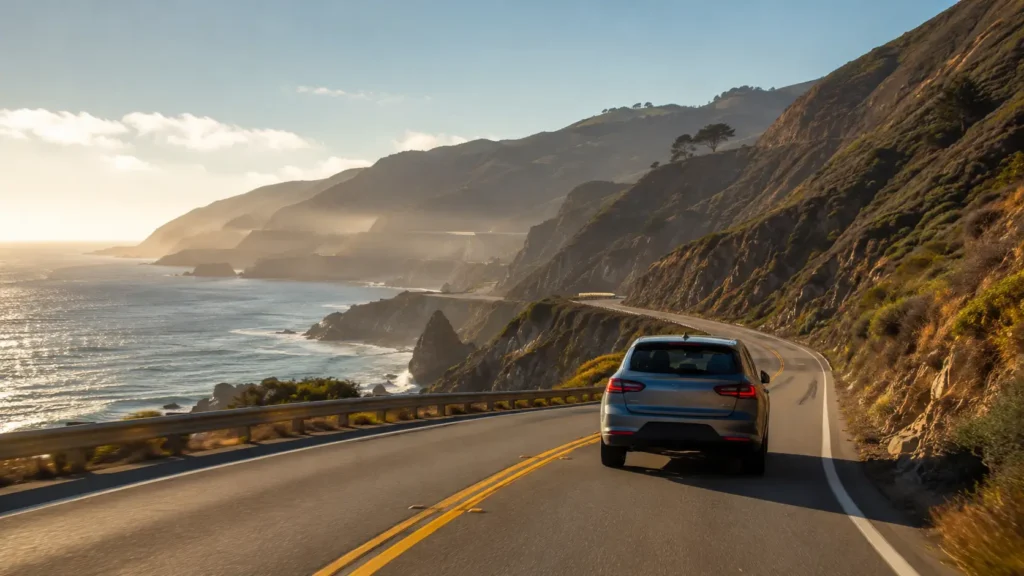
A California road trip is absolutely doable on a budget, and the cost doesn’t have to be as punishing as most people expect. The big expenses are the rental car, accommodation, fuel, food, and parking, and each one of those has real room to maneuver if you plan before you book. The route you choose makes an enormous difference too. Highway 1 is one of the most scenic drives in the country, and most of what makes it spectacular costs nothing at all. You don’t need to stay in an oceanfront hotel every night to enjoy it.
What Is the Best California Road Trip Route on a Budget?
The route that gives most budget travelers the best return on their money:
San Francisco → Monterey → Big Sur → San Luis Obispo → Santa Barbara → Los Angeles
Why it works: this route follows Highway 1 California road trip logic rather than tourist-spending logic. It keeps driving distances manageable, spreads your nights across a range of price points, and includes one genuinely affordable overnight base (San Luis Obispo) in the middle to balance the pricier stops on either side.
Quick Route Comparison
| Stop | Nights | Budget Level | Best For |
|---|---|---|---|
| San Francisco | 1–2 | $$$ | City attractions |
| Monterey | 1 | $$ | Coast |
| Big Sur | 1 | $$$ | Scenery |
| San Luis Obispo | 1 | $$ | Affordable base |
| Santa Barbara | 1 | $$$ | Beaches |
| Los Angeles | 2 | $$ | City & attractions |
How Many Days Do You Need for a California Road Trip?
3–4 Days
Tight but workable for a short coastal escape. You’ll need to skip a stop or two and accept that you’re moving fast. Best if you fly in and out of the same city.
5–7 Days
The best balance for most budget travelers on the SF to LA coastal route. Enough time to stop somewhere unexpected without paying for an extra night you didn’t need.
8–10 Days
Better for a slower trip with additional stops, or if you want to add Yosemite or Santa Cruz without feeling rushed. Note that Yosemite no longer requires timed entry reservations in 2026, though arriving before 8 a.m. on busy days is still worth doing.
One thing that catches people off guard: adding destinations doesn’t just add time. Every new overnight stop adds fuel, parking, and another hotel booking to navigate, and sometimes the cheaper room is in the worse location. Keeping the stop count tighter often keeps the total cost lower too.
Table of Contents
Where Should You Stop on a Highway 1 California Road Trip?
This stretch targets highway 1 California road trip travelers and the California route 1 road trip more specifically.
Monterey
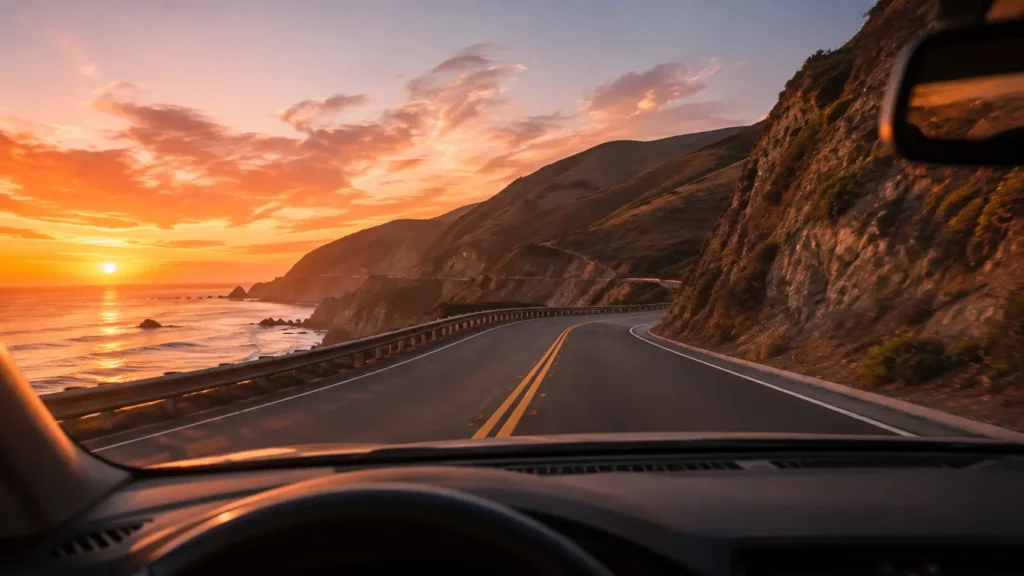
Monterey is worth a night and works out cheaper than Big Sur for accommodation. The waterfront is walkable, Cannery Row costs nothing to explore on foot, and the state beach is free. The aquarium is the one paid attraction that most people say lives up to its price.
Carmel-by-the-Sea
An easy add-on from Monterey, an hour’s walk or a short drive. The village is built for walking and window-shopping, and the beach at the end of Ocean Avenue is one of the better beaches on the Central Coast. Skip the galleries and restaurants on the main street unless you’re treating yourself the prices reflect the postcode.
Big Sur
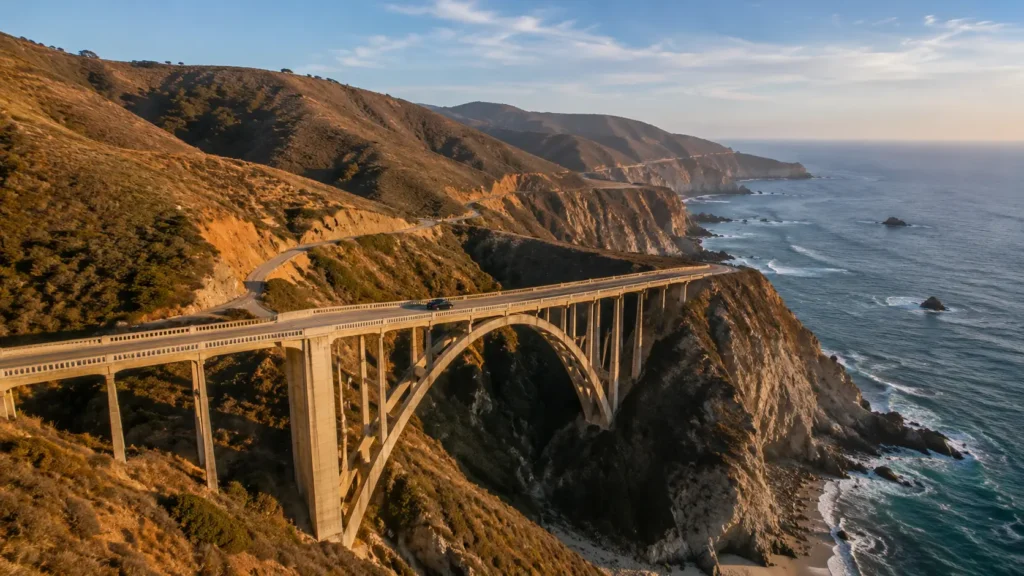
The scenery is the attraction and it costs nothing to drive through it. Bixby Bridge is the most photographed stop, a short pull-off with no fee. The state parks along the way (Pfeiffer Big Sur, Julia Pfeiffer Burns) have a day-use fee per vehicle but are worth it if the fog cooperates. Where Big Sur gets expensive is accommodation, which is why a lot of budget travelers base themselves in Monterey or San Luis Obispo and do Big Sur as a day drive instead.
San Luis Obispo
SLO (as locals call it) is the underrated budget base on this route. It sits roughly halfway between San Francisco and Los Angeles, prices for hotels and food run noticeably lower than the coastal towns, and it’s a genuine college town with a downtown that doesn’t feel like a tourist set. Use it as your recovery night between the Big Sur drive and the Santa Barbara stretch.
Santa Barbara
Santa Barbara has a free beach, a free State Street to walk, and a farmers market on Saturdays that’s worth the stop. The mission is the main paid attraction and it’s low cost. Where the budget discipline matters here is accommodation: staying one town inland or booking well in advance makes a real difference.
How Can You Save Money on a California Coast Road Trip?
This is where a California coast road trip either stays affordable or quietly doubles in cost.
How to Save on Your Rental Car
Pick the smallest economical vehicle the booking shows you, not the “recommended” upgrade. A compact car on Highway 1 handles the curves fine and burns noticeably less fuel than an SUV. <cite index=”3-1″>Gas in California is currently averaging around $5.20 per gallon</cite>, which is well above the national average, so the car you choose makes a real difference over a week’s driving. Compare rental companies rather than defaulting to the airport desk, and book with free cancellation so you can rebook if a cheaper rate shows up.
How to Save on Hotels
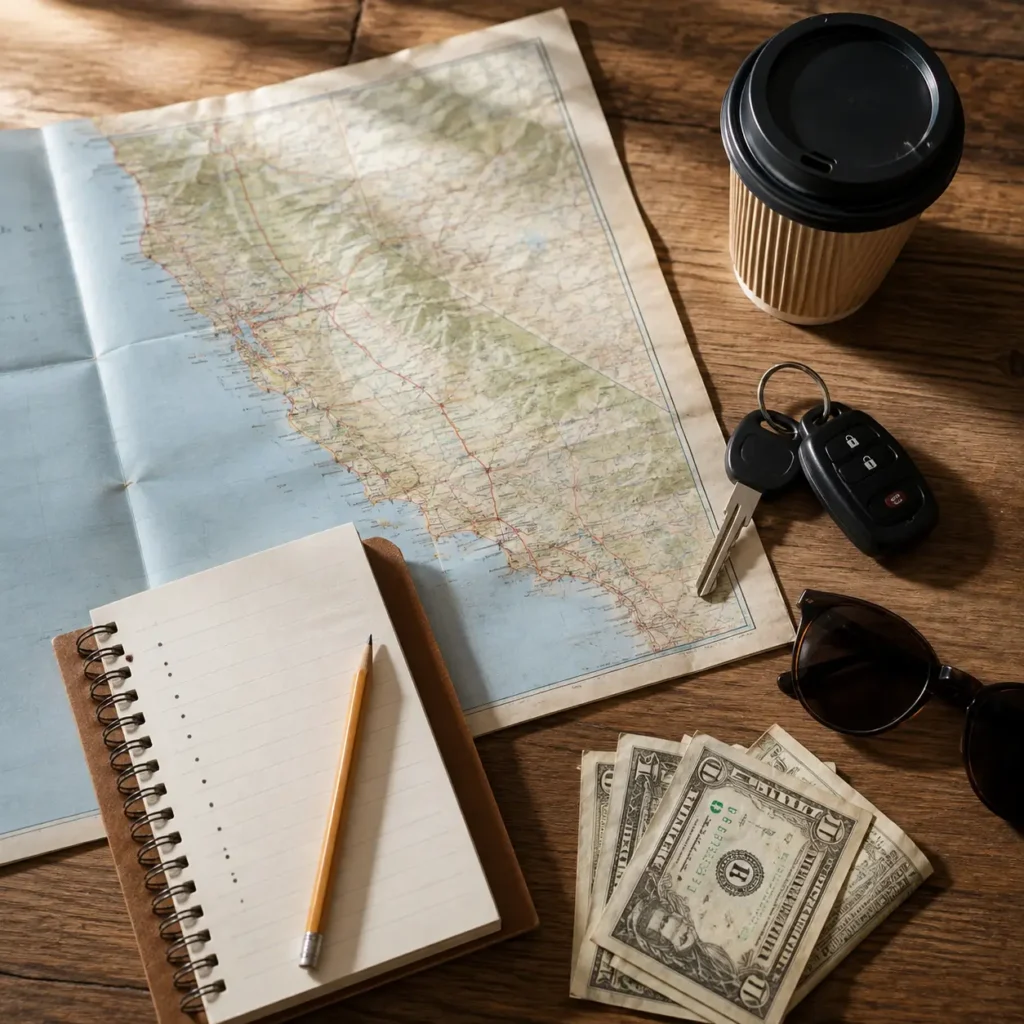
The two moves that save the most: book early, and consider staying slightly outside the expensive coastal towns. A motel 15 minutes inland from Santa Barbara or Monterey can run $40 to $60 less per night for the same quality sleep. Switching hotels every single night also adds friction and sometimes adds cost, since platforms favor longer stays with better rates.
How to Save on Food
Stock a small cooler before you leave San Francisco. <cite index=”5-1″>Packing drinks, fruit, and sandwich supplies can save $20 to $40 a day for two people</cite>, especially through the Big Sur stretch where options are limited and expensive anyway. Mix one sit-down meal with cheaper options daily rather than eating at restaurants three times, and avoid anything on Fisherman’s Wharf or within a block of any major tourist viewpoint.
How to Save on Attractions
Most of what makes Highway 1 memorable costs nothing: the drives, the viewpoints, the state beaches, the coastal walks. The America the Beautiful Annual Pass ($80 for US residents in 2026) covers entry to all national parks and federal recreation sites for a year and pays for itself on a California trip if you plan two or more paid park stops.
How Much Does a California Road Trip Cost?
<cite index=”2-1″>The average daily budget for a California road trip runs between $75 and $150 per person</cite>, covering rental car, fuel, accommodation, food, and basic attractions. Here’s how that breaks down by category:
| Expense | Budget Option | Comfortable Option |
|---|---|---|
| Rental car | ~$45–60/day | ~$80–120/day |
| Gas | ~$15–20/day | ~$25–35/day |
| Hotels | ~$70–100/night | ~$150–250/night |
| Food | ~$25–40/day | ~$60–100/day |
| Attractions | $0–15/day (free stops) | $30–60/day |
| Parking | $0–10/day (outside cities) | $25–45/day (SF, LA) |
The biggest gap between a budget trip and an expensive one isn’t the attractions it’s the hotel and parking combination in San Francisco and Los Angeles. One night of downtown parking in LA can cost as much as a full night’s accommodation in San Luis Obispo. If you’re flying into SF and out of LA (or vice versa), pick up your rental car after your SF city time and drop it before your LA city time. Use rideshare for the urban days and save the car for the coast.
Where Should You Stay to Keep Your California Road Trip Affordable?
Monterey vs. Nearby Areas
Monterey proper runs higher than neighboring Seaside or Marina, which are a few minutes by car and significantly cheaper. If your priority is the aquarium or the wharf, staying in Monterey makes sense. If your priority is the Big Sur drive the next morning, Seaside is fine.
Typical traveler: Couples and solo travelers who want walkable evenings. Budget consideration: Mid-range hotels in Monterey run $150–$220/night; Seaside can cut that to $90–$130. Transportation: Short drive to all the same stops.
Big Sur vs. San Luis Obispo
Big Sur accommodation is scenic and expensive, and the area has very limited budget options. Unless camping is on the table (Pfeiffer Big Sur State Park has campgrounds worth booking early), most budget travelers use it as a driving day from Monterey and overnight in San Luis Obispo instead.
Typical traveler: Budget travelers and those not committed to camping. Budget consideration: SLO hotels run $100–$160/night versus $200–$350+ in Big Sur. Why it works: You still drive through all of Big Sur — you just don’t pay to sleep there.
Santa Barbara vs. Nearby Alternatives
Goleta and Carpinteria both sit within 20 minutes of Santa Barbara with lower hotel rates. Goleta is closer to the UCSB area; Carpinteria is a quieter beach town with its own appeal.
Typical traveler: Anyone not committed to walking Santa Barbara at night. Budget consideration: $40–$70 less per night compared to downtown Santa Barbara.
Los Angeles
Skip the hotel parking. Park once at your accommodation and use rideshare for the urban days. Budget motels in neighborhoods like Koreatown, Culver City, or West Hollywood’s edges run $80–$130/night and put you on the same Metro lines and rideshare zones as hotels twice the price in Santa Monica.
What Should You Book Before Your California Road Trip?
In priority order:
- Rental car: Book as early as possible and with free cancellation. Rates climb fast as dates approach, especially in summer.
- Accommodation: Lock in San Francisco and Los Angeles first (the hardest to find deals on late), then the coastal stops.
- Popular activities: The Monterey Bay Aquarium and any specific Big Sur campgrounds book out well ahead in peak season.
- Airport transportation : Pre-book your transfer or check BART/Metro options rather than assuming a taxi is your only choice.
- Travel insurance : Buy soon after your first payment to preserve the most coverage options, including pre-existing condition waivers.
What can wait: food reservations for most stops, parking bookings (except in SF), and individual beach or viewpoint visits along Highway 1.
What Mistakes Make a California Road Trip More Expensive?
Booking an expensive hotel every night. One budget base like San Luis Obispo in the middle of the route offsets the pricier stops on either end.
Driving too far each day. Covering 300 miles of Highway 1 in a single push means you’re paying for the road and seeing nothing. The scenic stops are the point, and they don’t cost money to visit.
Renting a bigger car than you need. An SUV on a coastal highway in California adds fuel cost every day without adding anything to the experience.
Ignoring parking fees. San Francisco and Los Angeles hotel parking can run $35–$45 per night on top of the room rate. Factor this in when comparing hotel prices, or pick up the rental car after your SF days.
Eating every meal at tourist restaurants. Fisherman’s Wharf pricing in Monterey, the pier area in Santa Barbara, and anywhere near the Hollywood sign in LA will all cost more than the equivalent meal a short walk away.
Leaving accommodation until the last minute. Summer is peak season on this route and prices rise fast in the final two to three weeks before travel.
Trying to see too much. Three solid stops done well cost less and feel better than six rushed ones with full hotel checkouts and repacks every morning.
Is a California Road Trip Worth It on a Budget?
Yes — if the route and the experiences are the priority rather than the accommodation category or the paid attraction count. The coast sells itself. Bixby Bridge doesn’t charge admission. The drive through Big Sur on a clear morning doesn’t have a price tag. The Santa Cruz boardwalk is free to walk.
Budget travelers who enjoy driving, value scenery over luxury, and are willing to plan a few weeks ahead tend to get the most out of this trip. Travelers who need a guaranteed five-star beach hotel every night will find it difficult to keep costs reasonable on Highway 1, and might do better on a focused city trip instead.
California Road Trip FAQs
What is the cheapest California road trip route?
San Francisco to Los Angeles via Highway 1, overnighting in Monterey and San Luis Obispo rather than Big Sur, keeps total accommodation costs the lowest while still covering the main coastal highlights.
How much money do I need for a California road trip?
<cite index=”2-1″>Budget for $75–$150 per person per day</cite>, covering a basic rental car, fuel, budget accommodation, and modest food spending. A 7-day coastal trip for two people runs roughly $1,500–$2,500 total if you book ahead and avoid the expensive hotel-parking combinations in the cities.
What is the best time for a California road trip on a budget?
September and October offer the clearest coastal weather and slightly lower hotel prices than peak summer, making them the best months for combining good driving conditions with manageable costs.
Is Highway 1 worth driving?
Yes. It’s one of the most impressive coastal drives in the world, and the core experience of driving it costs nothing beyond fuel. <cite index=”4-1″>Highway 1 through Big Sur is now fully open for the first time in nearly three years in 2026</cite>, following closures from landslides, so the full route is accessible again.
How many days are enough for a California road trip?
Five to seven days covers the SF to LA coastal route properly. Three days is possible but rushed. Ten days lets you add stops without feeling the pace.
Where is the cheapest place to stay along Highway 1?
San Luis Obispo and the Monterey-adjacent towns of Seaside and Marina consistently offer the best value on the route, with decent accommodation running $90–$130/night.
Can you do a California coast road trip without spending a lot?
Yes. The main cost drivers are accommodation and the rental car. Keep one or two nights at budget bases, book the car early with free cancellation, pack a cooler for food through the Big Sur stretch, and skip the paid attractions that have free equivalents nearby.
Conclusion
A california road trip doesn’t have to be a luxury vacation. With the right route, affordable overnight stops, a practical rental car, and a little planning, you can experience Highway 1 and the California coast without letting accommodation, food, and transportation costs take over your budget.
Before you book, compare your major trip expenses first. Saving a little on your hotel and rental car can leave you with much more money to enjoy the stops that make the journey worthwhile.